
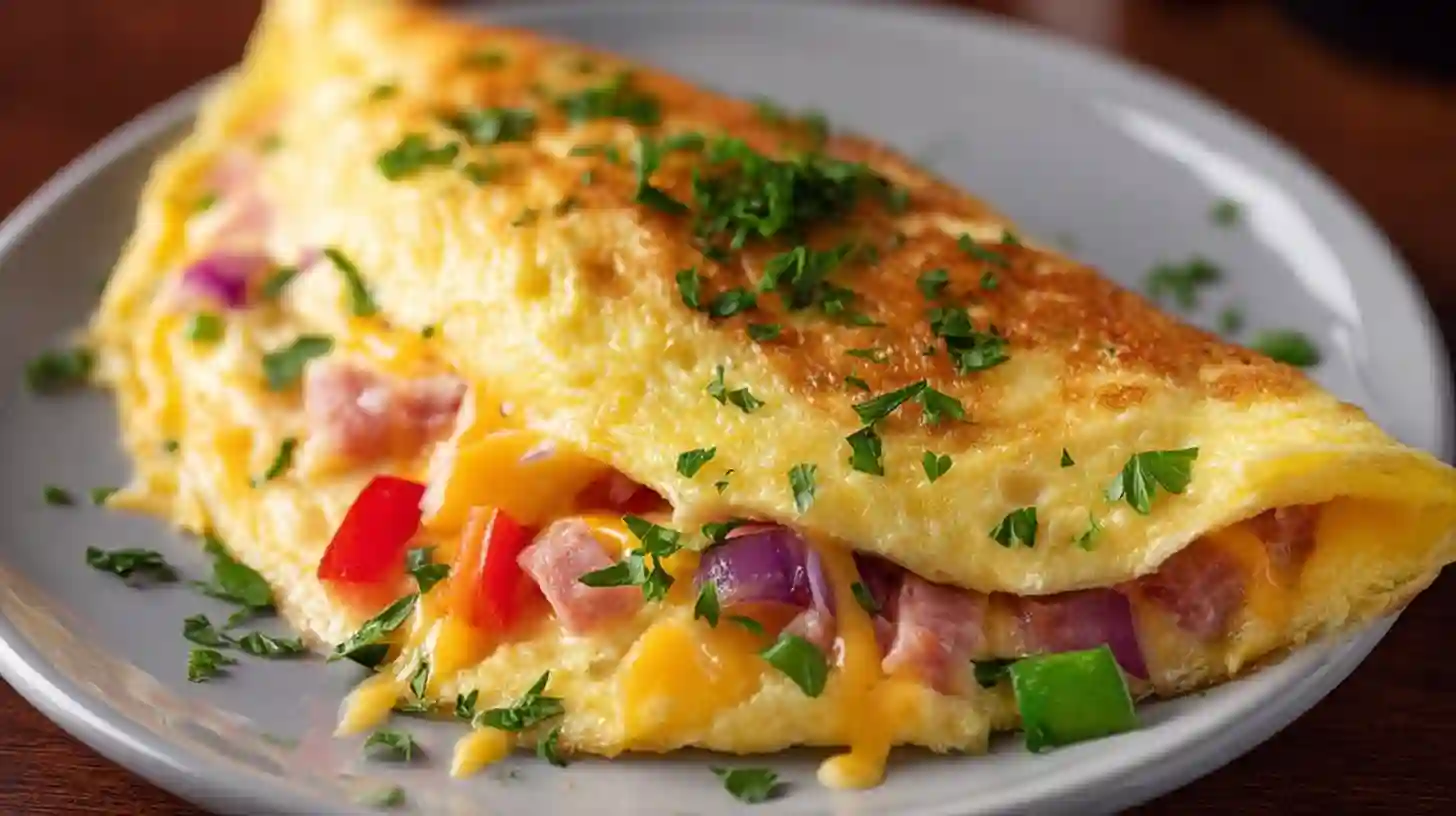
The Western Omelette stands as a titan in the pantheon of American breakfast classics. It is a dish that marries the savory depth of smoked meats with the fresh crunch of bell peppers and onions, all enveloped in a cloud of perfectly aerated eggs.
Whether you are seeking a healthy Western omelette recipe for a protein-packed morning or a comforting brunch staple, understanding the mechanics of this dish is essential.

Western Omelette

Equipment
- 10-inch non-stick skillet
- Mixing bowls
- Whisk
- Cutting Board
- Chef’s knife
- Spatula
- Measuring spoons
- Grater
Ingredients
Western Omelette Ingredients
- 4 large eggs room temperature
- 2 Tbsp whole milk
- 1/4 tsp salt
- 1/4 tsp black pepper freshly ground
- 1 Tbsp unsalted butter
- 1/4 cup diced green bell pepper
- 1/4 cup diced red bell pepper
- 1/4 cup diced yellow onion
- 1/4 cup diced cooked ham
- 1/4 cup shredded sharp cheddar cheese
- 1/4 cup shredded Monterey Jack cheese
- 1 Tbsp chopped fresh parsley for garnish
Instructions
- Dice the peppers, onion, and ham into small, uniform pieces. Shred the cheeses and set all ingredients within reach.
- In a bowl, whisk eggs, milk, salt, and pepper vigorously until frothy and pale yellow.
- Melt butter in a non-stick skillet over medium heat. Add bell peppers and onions; sauté 3–4 minutes until softened. Stir in ham and cook 1 minute more. Remove mixture and wipe skillet clean.
- Pour the egg mixture into the skillet over medium-low heat. Gently push cooked edges inward, allowing uncooked egg to fill the gaps.
- When the top is nearly set, spread the cooked filling and cheeses over one half. Fold the omelette, cover, and cook 1 minute until the cheese melts.
- Slide the omelette onto a plate, garnish with parsley, and serve hot.
Notes
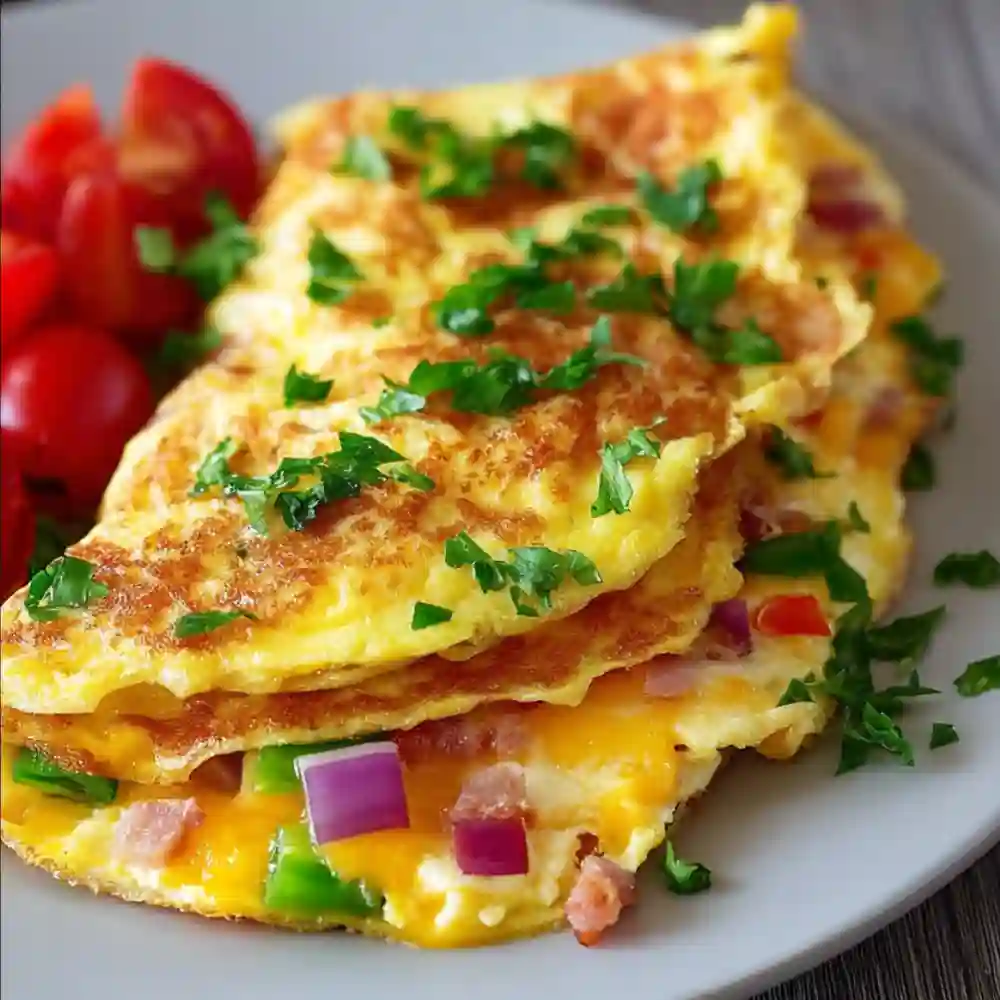
Table of Contents
Many home cooks struggle with heavy, dense eggs or watery fillings, but with the right technique, perfection is attainable. This guide serves as a comprehensive resource for mastering the best Western omelette recipe in your own kitchen.
We will explore the history, the food science behind the fluffiness, and the precise methodology required to replicate that nostalgic diner experience without leaving your home.
Introduction to the Western Omelette
The Classic Diner Experience
I still vividly recall Sunday mornings in my grandmother’s kitchen, where the air was thick with the aroma of sautéing onions and peppers. She treated the skillet with the precision of a surgeon, insisting that a traditional Western omelette recipe was not merely breakfast, but a ritual.
The sensory experience of this dish is undeniable: the sizzling sound of the vegetables hitting the hot butter, the vibrant confetti of green and red peppers, and the way the sharp cheddar creates a molten river when sliced.
It is a staple that transcends regions, finding a home on menus from high-end brunch spots to roadside diners.
The “Western” vs. “Denver” Confusion
One cannot discuss this dish without addressing the nomenclature. Is there a difference between the Denver omelette vs Western omelette? Practically speaking, they are identical.
Both utilize the same core trinity of ingredients: onions, peppers, and diced meat. However, culinary historians often note that the “Western” label is broader, sometimes implying a sandwich form, while the “Denver” strictly refers to the omelette.
Regardless of what you call it, this article provides the definitive method for both.
Why This Recipe Wins
This approach is superior because it focuses on moisture control. A simple western omelette often fails because raw vegetables release water into the eggs, breaking the emulsion.
My method ensures a sturdy yet tender curd. Furthermore, for those monitoring their intake, this Western omelette recipe is naturally low-carb and high-protein, making it a robust start to the day.
The History of the Western Omelette
From Sandwich to Skillet
The lineage of the Western style omelette recipe is surprisingly utilitarian. It traces its roots back to the late 19th and early 20th centuries, arguably beginning as the “Denver Sandwich.”
Cowboys, rail workers, and pioneers required a meal that was both substantial and portable. The solution was placing the egg, meat, and vegetable mixture between two slices of bread.
Over time, as plating became more common in diners, the bread moved to the side as toast, and the Western omelette recipe as we know it was born.
The Chinese Railroad Influence
A fascinating theory regarding the traditional Western omelette recipe involves the influence of Chinese cooks working on the transcontinental railroad.
Many food historians posit that these cooks adapted Egg Foo Young—a Cantonese omelette dish—to suit the local palate and available ingredients of the American West.
By substituting indigenous ingredients and serving it on bread, they created a fusion dish that eventually evolved into the Spanish omelette vs Western omelette debate, though the Spanish version traditionally includes potatoes.
Regional Evolution
As the dish migrated from the West to the East Coast, it solidified its place in the American culinary canon. It became a standard test of a short-order cook’s skill.
Variations began to appear, such as the Southwest omelette, which incorporates spicier elements, or the inclusion of cheese, which was not always standard in the original sandwich.
Today, whether you are looking for an IHOP Western omelette recipe replica or a Hampton Inn Western omelette recipe, you are essentially enjoying a piece of culinary history that helped build the American frontier.

Essential Ingredients for the Perfect Western Omelette
The “Western Mirepoix”
The soul of this dish lies in its aromatics. A Western omelette recipe relies heavily on the quality and preparation of its vegetables.
You must use green bell peppers for that classic, slightly bitter, vegetal note that cuts through the richness of the egg. I also recommend including red bell peppers for sweetness and visual appeal.
Regarding onions, the choice between white and yellow is significant. White onions offer a sharper, cleaner bite, while yellow onions provide a mellower sweetness. For a simple Western omelette recipe, yellow onions are often the crowd favorite.
The Protein: Smoked Turkey Ham
Traditionally, this recipe utilizes cured pork products. However, to adhere to dietary preferences and health-conscious choices, we will utilize high-quality smoked turkey ham or beef pastrami.
The goal is to replicate the salty, smoky, and savory profile without using pork. When dicing your turkey ham, ensure the cubes are uniform.
This provides a texture similar to a steak omelette, where every bite contains a substantial piece of meat. Using a robustly smoked turkey thigh meat ensures you do not lose that depth of flavor essential to a Western omelette recipe with cheese.
The Cheese
While the original 19th-century versions may have omitted dairy, a modern Western omelette recipe with cheese is non-negotiable for most palates.
I strongly advise against using pre-shredded bagged cheese. These products are coated in cellulose to prevent clumping, which inhibits proper melting.
Instead, grate your own Sharp Cheddar, Monterey Jack, or Pepper Jack from a block. This ensures a creamy, cohesive filling that binds the vegetables and meat together.
The Eggs
The foundation of the dish is, of course, the egg. Use Large AA eggs for the best ratio of yolk to white.
A crucial tip often overlooked in easy Western omelette recipe guides is temperature. Cold eggs hit the hot pan and seize immediately.
I recommend taking your eggs out of the refrigerator 10 to 15 minutes prior to cooking. Room-temperature eggs whisk more voluminously and cook more evenly, preventing that rubbery texture we all wish to avoid.
The Science of “Fluffiness” (Technique Deep Dive)
Water vs. Milk: The Great Debate
In my culinary explorations, I have found that the liquid added to the eggs is the most contentious variable. Many assume milk makes eggs fluffier.
However, from a food science perspective, milk adds fat, which creates a creamy, dense curd—perfect for scrambled eggs, but heavy for an omelette.
For a fluffy Western omelette recipe, water is the superior addition. As the water heats up in the pan, it turns to steam.
This steam expands within the egg protein matrix, creating lift and aeration. This is the secret behind the Western omelette recipe Pioneer Woman style and other famous diner versions.
The Salt Timing
When to salt your eggs is a matter of chemistry. If you salt your eggs and let them sit, the salt breaks down the protein structure, leading to a watery mixture.
However, salting immediately before cooking or right as they hit the pan is ideal.
For the best Western omelette recipe, I recommend whisking the eggs vigorously right before pouring. This mechanical action, combined with the correct salting time, ensures the structure remains intact.
The Heat Control
One must respect the thermodynamics of the skillet. A common mistake in a Western egg omelette recipe is using high heat to rush the process.
High heat causes the proteins to coagulate too tight, squeezing out moisture and resulting in a tough, browned exterior (often called “country style”).
For a refined, “French-style” exterior that is pale yellow and tender, medium-low heat is the secret weapon. It allows the egg to set gradually, maintaining a custard-like consistency that perfectly creates a healthy Western omelette recipe.
Step-by-Step Preparation Guide
Step 1: The Mise en Place
Preparation is paramount. Before you even light the stove, ensure all your ingredients are diced to a uniform 1/4-inch dice.
This uniformity ensures that the peppers, onions, and turkey ham heat through at the same rate. In a professional kitchen, or even when making a Western omelette recipe video, this step is emphasized because different sized chunks lead to an uneven eating experience.
Step 2: The Sauté (Crucial Step)
Begin by heating a tablespoon of butter or oil in a non-stick skillet over medium heat. Add your diced onions and peppers.
Sauté them for approximately 3-4 minutes until they are softened. Then, add your smoked turkey ham. This step is critical for any Western omelette recipe easy or complex.
Raw vegetables release water as they cook. If you add raw vegetables directly to the eggs, that water will release during the omelette setting process, resulting in a watery, unappealing mess.
Pre-cooking concentrates the flavors and creates a Maillard reaction on the onions and turkey. Remove this mixture from the pan and set it aside.
Step 3: The Whisk
Crack three large eggs into a bowl. Add a teaspoon of water (remember the steam principle discussed earlier).
Whisk vigorously until the mixture is completely uniform and frothy. You want to see bubbles on the surface.
This incorporation of air is what distinguishes a homemade Denver omelet from a flat egg pancake.
Step 4: The Pour and “Lift”
Wipe your skillet or add a fresh touch of butter. Pour the eggs in. Now, do not just watch them sit.
Use a heat-resistant rubber spatula to gently lift the edges of the setting egg. Tilt the pan so the uncooked liquid egg flows underneath the lifted edge.
This technique creates layers of fluffy egg and ensures the omelette cooks through without burning the bottom. This is a technique often seen in a Western omelette recipe Pioneer Woman demonstration or high-end tutorials.
Step 5: The Fill and Fold
Once the top is nearly set but still slightly moist (the residual heat will finish cooking it), sprinkle your sautéed vegetable and turkey mixture over one half of the omelette.
Top the mixture with your grated cheese. Using your spatula, carefully fold the empty half over the filled half.
Let it sit for 30 seconds to melt the cheese. Slide it onto a warm plate. This method is far superior to mixing everything in, as seen in some baked Western omelette recipe variations, as it preserves the integrity of the egg texture.
Variations & Dietary Customizations
The “Spicy Western”
For those who enjoy a piquancy to their morning meal, the transition from a standard Western to a Southwest omelette or Mexican omelette recipe is seamless.
Incorporating diced jalapeños into the vegetable sauté adds a significant kick. You might also consider adding a pinch of cumin or cayenne pepper to the egg mixture.
Substituting the turkey ham for a spicy beef chorizo (ensure it is beef-based to avoid pork) transforms the profile entirely while maintaining the structural integrity of the omelette.
The Baked Western (Casserole)
If you are hosting a brunch for a large family, standing over a stove making individual omelettes is impractical.
This is where the oven baked western omelette recipe or Denver omelette casserole shines.
You can scale this recipe by using a 9×13 baking dish. Grease the dish, spread the sautéed mixture on the bottom, and pour a dozen beaten eggs over the top.
Bake at 350°F (175°C) for about 25-30 minutes. This creates a baked Western omelette recipe that feeds a crowd efficiently.
Egg White Option
For a healthy Western omelette recipe focused on cholesterol reduction, egg whites are a viable substitute.
However, egg whites lack the fat of the yolk, which can make them rubbery. To counteract this, cook them on slightly lower heat and perhaps use a small amount of olive oil.
Include extra vegetables like spinach or tomatoes to add moisture and flavor, compensating for the lack of rich yolk.
Muffin Tin Westerns
Another excellent variation for meal planning is the Western omelette breakfast muffin.
Pouring the mixture into muffin tins and baking them provides grab-and-go portions.
This is essentially a miniature Western style omelette recipe that freezes beautifully, allowing you to enjoy a homemade breakfast even on busy work mornings.
Perfect Pairings & Serving Suggestions
The Starch
A traditional Western omelette recipe is rarely served in isolation. It demands a starch to absorb any savory juices.
Crispy hash browns or home fries seasoned with paprika are the classic diner accompaniment.
The texture contrast between the fluffy egg and the crunchy potato is gastronomically pleasing.
The Toast
Toast is the vehicle for the omelette. I prefer a robust Rye or Sourdough.
Interestingly, many enjoy a sweet element, like strawberry jam, on their toast to contrast the salty, savory nature of the Western omelette recipe with cheese.
This sweet and savory interplay balances the palate.
The Freshness
Because the omelette is rich with cheese and meat, a fresh element is welcome. Sliced avocado offers a creamy texture that pairs with the Western egg omelette recipe.
Alternatively, a simple fruit salad with melon and berries cuts through the richness of the cheddar and turkey ham.
Condiments
Condiments are a matter of personal preference but are widely accepted. Ketchup is the controversial classic.
However, a vinegar-based hot sauce like Tabasco or a fresh salsa can elevate a simple Western omelette into a zesty experience.
For a Crab omelette recipe, one might use hollandaise, but for a Western, simple tomato-based condiments reign supreme.
More easy Recipes To Try!
FAQs (Based on People Also Ask)
What makes a Western omelette?
Draft Answer: A true Western omelette recipe is defined by its specific filling: a mixture of diced onions, green bell peppers, and cubed ham (or in our case, smoked turkey). It differs from a plain cheese omelette by incorporating these savory, sautéed elements directly into the fold.
What is the difference between a Denver and Western omelette?
Draft Answer: This is a common query. The terms Denver omelette vs Western omelette are largely interchangeable in modern dining. Historically, some sources suggest the “Western” was a sandwich, while the “Denver” was the plated version. Others claim the Western blends the ingredients into the egg, while the Denver folds them.
How do restaurants get omelets so fluffy?
Draft Answer: Whether it is an IHOP Western omelette recipe or a local diner’s secret, the fluffiness comes from aeration. Restaurants whisk eggs vigorously to trap air. They also often use griddles with consistent heat and sometimes add a splash of pancake batter or water to create steam lift.
What are the best ingredients to put in an omelette?
Draft Answer: The best Western omelette recipe relies on low-moisture ingredients. Pre-cooked meats like turkey ham or beef bacon, sautéed mushrooms, onions, and peppers are ideal. Avoid raw, watery vegetables like tomatoes unless they are deseeded, as they can make the Western omelette recipe easy to ruin by making it soggy.