

Making your own sourdough starter is the single best way to unlock incredible, bakery-quality bread at home.
This simple mixture of flour and water captures wild yeast from the air, transforming into a bubbly, living culture without any commercial packets. While many view it as complex sourdough art, the process is actually straightforward when you have the right sourdough starter maintenance instructions.
You do not need a degree in chemistry or fancy tools. You just need patience and this guide. By following our step-by-step sourdough recipe, you will soon be baking everything from easy sourdough bread to delicious pan de masa madre. Let’s demystify the process and get you ready to bake.
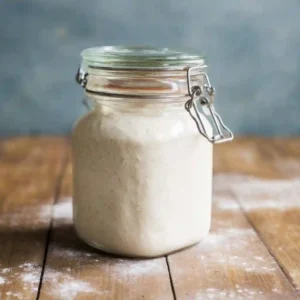
Beginner Sourdough Starter

Equipment
- Scale
- Jar (3/4L or larger)
- Rubber spatula
Ingredients
Day 1 Ingredients
- 60 g whole wheat flour about 1/2 cup
- 60 g water about 1/4 cup, warm
Feed Ingredients (Days 3-7)
- 60 g unbleached all purpose flour or bread flour about 1/2 cup
- 60 g water about 1/4 cup, warm
Instructions
- Day 1: Discard half. Feed with 60 g flour and 60 g water, mix, cover, and rest. Starter should now be bubbly, doubled, and ready to use.
- Day 2: Check for bubbles. If none, stir once or twice but otherwise rest another 24 hours.
- Day 3: Discard half of the starter. Add 60 g flour and 60 g water, mix until smooth, cover, and rest another 24 hours.
- Day 4: Discard half. Feed with 60 g flour and 60 g water, mix, cover, and rest.
- Day 5: Discard half. Feed with 60 g flour and 60 g water, mix, cover, and rest.
- Day 6: Discard half. Feed with 60 g flour and 60 g water, mix, cover, and rest.
- Day 7: Discard half. Feed with 60 g flour and 60 g water, mix, cover, and rest. Starter should now be bubbly, doubled, and ready to use.
Notes
Why You’ll Love This Sourdough Starter Recipe
We designed this beginner sourdough starter recipe to eliminate the stress often associated with fermentation. Here is why this specific method stands out:
Perfect for Novices: This is truly sourdough for dummies; we explain every texture change so you never feel lost.
Simple Ingredients: You only need flour and water to create a robust culture.
Zero Waste Options: We show you how to use sourdough bread discard recipes so nothing goes to waste.
Highly Active Results: Our method uses whole wheat to jumpstart activity, ensuring the best sourdough starter recipe success rate.
Versatile: Once established, this starter works for recipe using sourdough starter ideas like pizza dough, pancakes, or waffles.
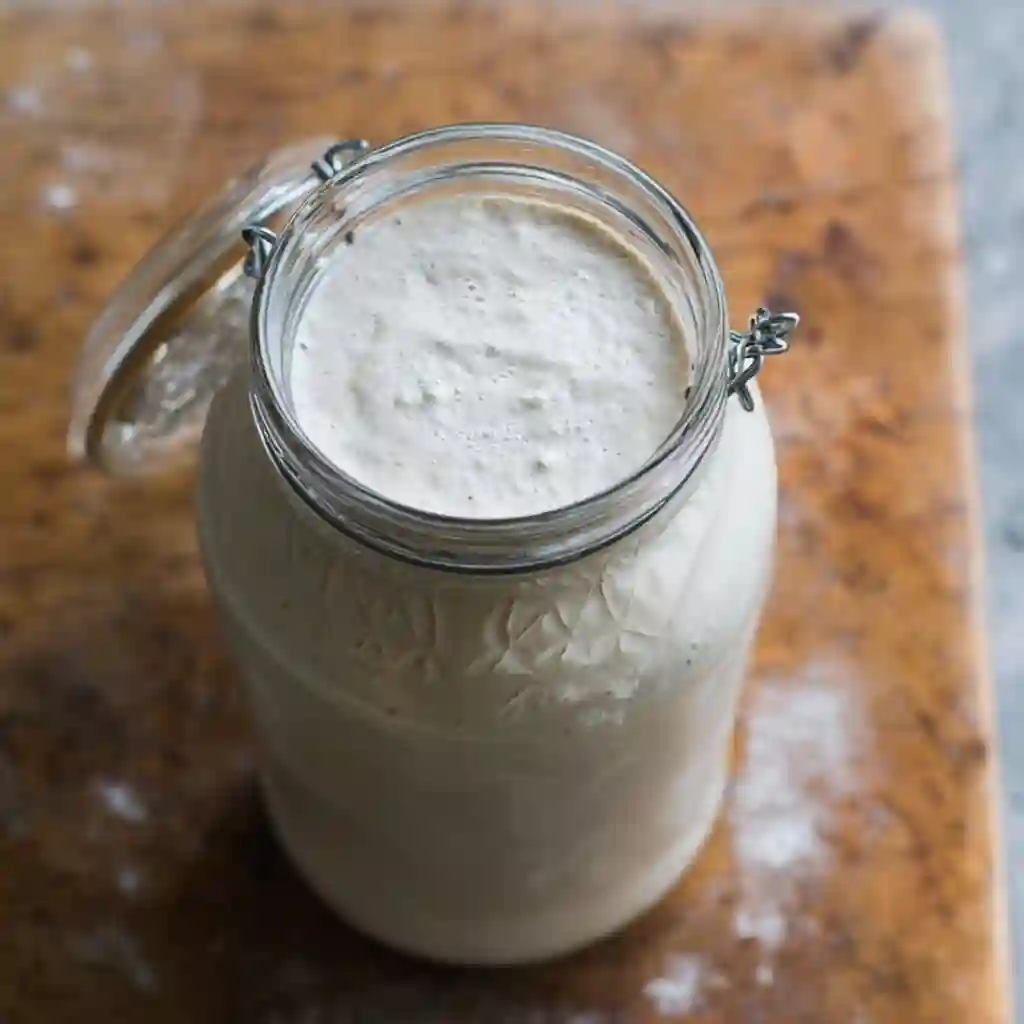
Ingredients Needed for Your DIY Sourdough Starter
To build a strong foundation for your wild yeast, you need the right fuel. While you can technically use any flour, specific types yield better results for fermentation.
- Whole Wheat Flour: 60 g (½ cup)
- Role: You will use this for Day 1 only. Whole grains provide the nutrients needed to wake up the yeast quickly.
- Unbleached All-Purpose Flour (or Bread Flour): 1 bag (5lb)
- Role: You will use this for feeding from Day 3 onwards. It is affordable and perfect for long-term sourdough starter maintenance instructions.
- Water: Warm (approx. 85°F / 29°C)
- Role: You will use this throughout the process. Warm water encourages the culture to become bubbly and active faster than cold water.
Note: For the most consistent results, we recommend high-quality brands like King Arthur Flour (KAF), Trader Joe’s, or Whole Foods.
How to Make Sourdough Starter: A Step-by-Step Sourdough Recipe
This process takes about 7 days. Remember that fermentation is a biological process, not a mechanical one. If your kitchen is cold, it might take a day longer.
Day 1: Plant the Seed
We begin by mixing water and whole wheat flour to capture wild microbes. This is the first step in your DIY sourdough starter journey.
- Combine Ingredients: Add 60 g (½ cup) of whole wheat flour and 60 g (¼ cup) of warm water to a clean jar.
- Mix Well: Use a fork or rubber spatula to mix until smooth. The consistency will be thick and pasty.
- Cover: Place a lid loosely on top or cover with plastic wrap.
- Rest: Leave the jar in a warm spot (75°F is ideal) for 24 hours.
Day 2: The Resting Phase
Today requires patience. You are letting the wild yeast settle in.
- Check: Look for small bubbles. If you see none, do not worry.
- Do Nothing: Do not feed. Do not discard.
- Wait: Let it rest in the warm spot for another 24 hours.
Day 3: The First Feed and The Sourdough Slump
You might smell a funky aroma, like gym socks or vinegar. This is normal. You might also see a “false start” where activity slows down.
- Discard: Remove about half the starter (60 g) from the jar.
- Feed: Add 60 g (½ cup) unbleached all-purpose flour and 60 g (¼ cup) warm water.
- Mix: Stir until it resembles thick pancake batter.
- Rest: Cover and let sit for 24 hours.
Days 4, 5, 6 & 7: Daily Maintenance and Reactivating Sourdough Starter
Now we build strength. You must stick to a regular feeding schedule.
- Discard: Remove half the starter every day. (Save this for easy sourdough discard recipes!)
- Feed: Add 60 g (½ cup) all-purpose flour and 60 g (¼ cup) warm water.
- Monitor: After feeding, the starter should become spongy and eventually double in size.
- Test: By Day 7, if a spoonful floats in water, you are ready to bake easy sourdough bread.
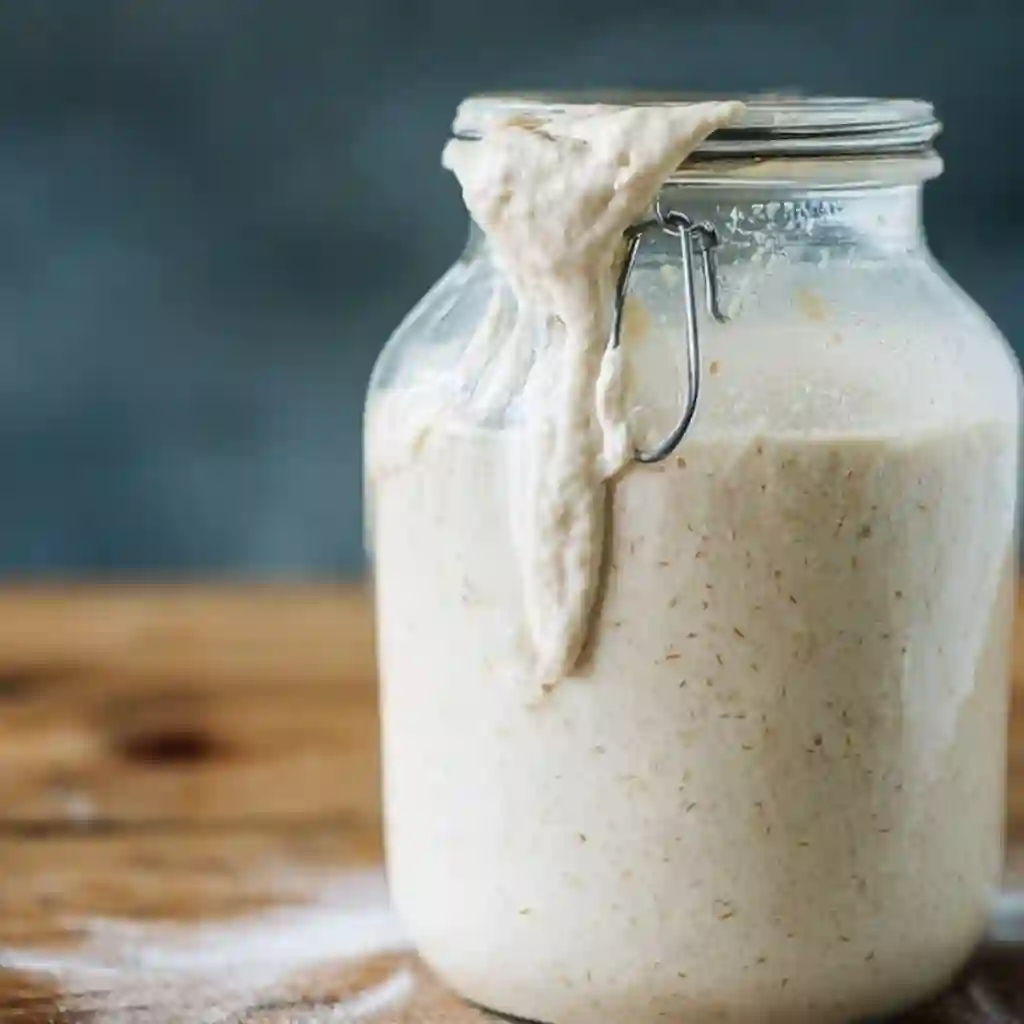
Serving, Storage, and Quick Sourdough Discard Recipes
Once your starter is active, you have options for storage and baking.
Bake Daily: Keep your starter on the counter and feed it daily. This is ideal if you want to bake fresh pan de masa madre often.
Bake Weekly: Store it in the fridge. This puts the yeast to sleep. Feed it once a week to keep it healthy. This is vital for proper sourdough starter maintenance instructions.
Use the Waste: Don’t throw away the removal portion! Search for quick sourdough discard recipes or discarded sourdough starter recipes. You can make crackers, pancakes, or even brownies.
Dry It: If you need a break, you can create a dry sourdough starter elliot homestead style by spreading it thin on parchment paper to dry for long-term storage.
Helpful Notes for Sourdough Ideas and Troubleshooting
Hooch on Sourdough Starter: If you see a dark liquid on top, it is called hooch. It means your starter is hungry. Pour it off and feed immediately.
Pudding Chia Texture: If your starter looks like pudding chia or has a weird gel texture, it might be over-fermented. Feed it more often.
Reactivating Sourdough Starter: If you neglect your jar in the fridge for weeks, just take it out, discard the dark liquid, and feed it warm water and fresh flour. It usually wakes up within two feedings.
Hydration: We use a 100% hydration level (equal weights flour and water). This makes math easy and works for almost any easy sourdough bread recipe.
Conclusion
Congratulations! You have successfully navigated the world of wild yeast. By following this beginner sourdough starter recipe, you now possess a living ingredient that can last a lifetime.
Whether you plan to bake a rustic loaf, try sourdough ideas like cinnamon rolls, or explore sourdough art with intricate scoring, it all starts here. Do not let the “Day 3 slump” discourage you. Consistency is the secret ingredient.
We want to see what you create! Did you try a recipe using sourdough starter from this guide? Leave a comment and a 5-star rating below. Share your bubbly jar photos on social media and tag us. What easy sourdough discard recipes are you excited to try first? Let us know!
Frequently Asked Questions (FAQ)More easy Recipes To Try!
Is sourdough starter really just flour and water?
Yes, absolutely. A sourdough starter is simply a culture of fermented flour and water. The wild yeast and bacteria naturally present in the grain and your kitchen air colonize the mixture. This eliminates the need for commercial yeast packets found in stores.
What is the 1:1:1 rule for sourdough starter?
The 1:1:1 rule is the gold standard for sourdough starter maintenance instructions. It means you feed your starter equal parts by weight. For example: 60g starter, 60g flour, and 60g water. This keeps the acidity balanced and the yeast happy.
Is a sourdough starter a mother?
Yes. Bakers often call their primary jar of starter the “Mother,” “Chef,” or “Levain.” You keep this “Mother” alive forever by feeding it. When baking pan de masa madre, you take a small portion from the Mother to build your dough and feed the rest to keep it going.
Is sourdough healthier than regular bread?
Many experts say yes. The long fermentation process breaks down gluten and anti-nutrients like phytic acid. This makes easy sourdough bread easier to digest and allows your body to absorb more minerals. It also has a lower glycemic index than quick-rise breads.
What is the 3 ingredient sourdough?
The classic 3 ingredient sourdough refers to Flour, Water, and Salt. That is it. The “yeast” is the sourdough starter itself (which is just flour and water). It is the purest form of bread baking and yields the most flavor.
How much sourdough starter do I use for a loaf of bread?
Most standard recipes call for about 15% to 20% starter based on the flour weight. For a typical single loaf, this is usually between 50g to 100g of active, bubbly starter. Always use a digital scale for the best accuracy.
What does the Bible say about sourdough?
The Bible mentions “leaven” (sourdough) frequently. It is often used as a metaphor for influence. In the Old Testament, unleavened bread symbolizes purity and haste during Passover. In the New Testament, Jesus compares the Kingdom of Heaven to leaven, showing how a small amount of faith can transform the whole world.
What does an unhealthy starter look like?
If you see pink, orange, or fuzzy green spots, your starter has mold. Throw it away and start over. However, hooch on sourdough starter (a dark grey liquid) is not mold; it is just hunger. Pour the hooch off and feed the starter to save it.