
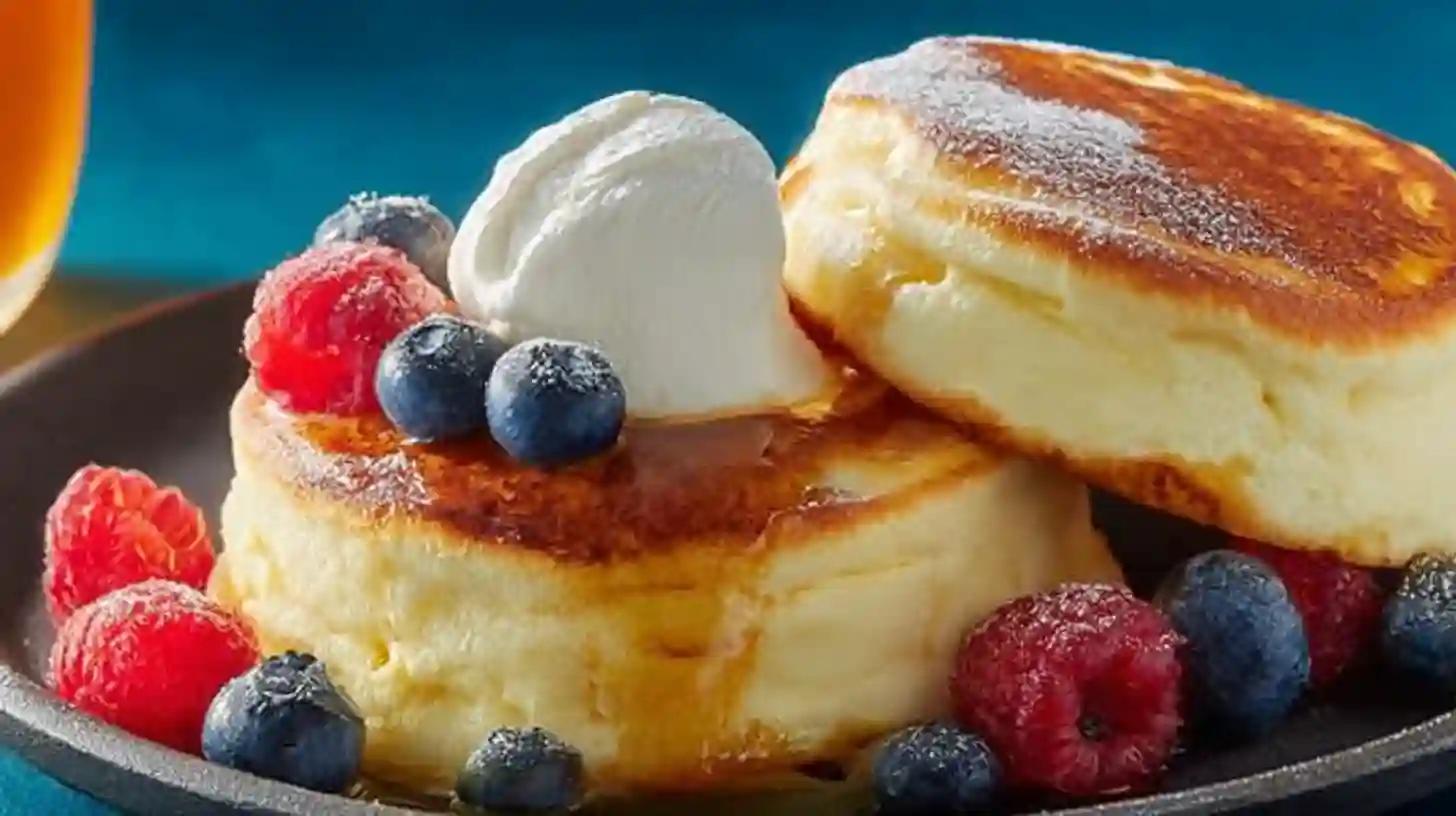
Japanese Soufflé Pancakes represent the pinnacle of breakfast engineering, transforming humble ingredients into a gravity-defying culinary experience.
This guide provides a comprehensive, technically rigorous approach to mastering the Fluffy Pancakes Recipe, moving beyond simple instructions to explain the thermodynamics and protein chemistry required for success.
Mastering this dish offers more than just a breakfast; it provides a foundational lesson in meringue stability and heat management that applies to high-end pastry work.
Ideal for the home cook seeking restaurant-quality results, this analysis dissects the “why” behind every failure point, ensuring your pancakes remain tall, airy, and structurally sound.
Fluffy Japanese Soufflé Pancakes
Equipment
- Nonstick frying pan with lid
- Electric hand mixer
- Whisk
- Mixing bowls
- Offset spatula
- Kitchen scale
- Ladle or scoop
Ingredients
Soufflé Pancakes
- 2 large eggs separated
- 1½ Tbsp whole milk
- ¼ tsp pure vanilla extract
- ¼ cup cake flour sifted
- ½ tsp baking powder
- 2 Tbsp sugar
- 1 Tbsp neutral oil for greasing pan
- 2 Tbsp water for steaming
Whipped Cream (optional)
- ½ cup heavy whipping cream cold
- 1½ Tbsp sugar adjust to taste
Toppings
- 1 Tbsp confectioners’ sugar for dusting
- fresh berries strawberries, blueberries, etc.
- maple syrup for drizzling
Instructions
- Separate the egg whites and yolks into two bowls. Freeze the egg whites for 15 minutes.
- In the yolk bowl, whisk milk and vanilla until frothy. Sift in flour and baking powder, whisking until smooth without overmixing.
- Beat the chilled egg whites until foamy, then gradually add sugar and whip until stiff, glossy peaks form.
- Preheat a large nonstick pan over low heat (300°F / 150°C). Lightly oil the surface and wipe off excess.
- Gently fold one-third of the meringue into the yolk batter, then the remaining meringue in two additions, keeping as much air as possible.
- Scoop batter onto the pan in tall mounds (about 3 pancakes), stacking additional scoops on top to build height.
- Add 1 Tbsp water to the pan for steam, cover with a lid, and cook for 6–7 minutes. After 2 minutes, add more batter on top of each pancake.
- Gently flip each pancake with an offset spatula, add another Tbsp of water, cover, and cook for 4–5 minutes until golden and set.
- Serve immediately with whipped cream, berries, powdered sugar, and maple syrup.
Notes
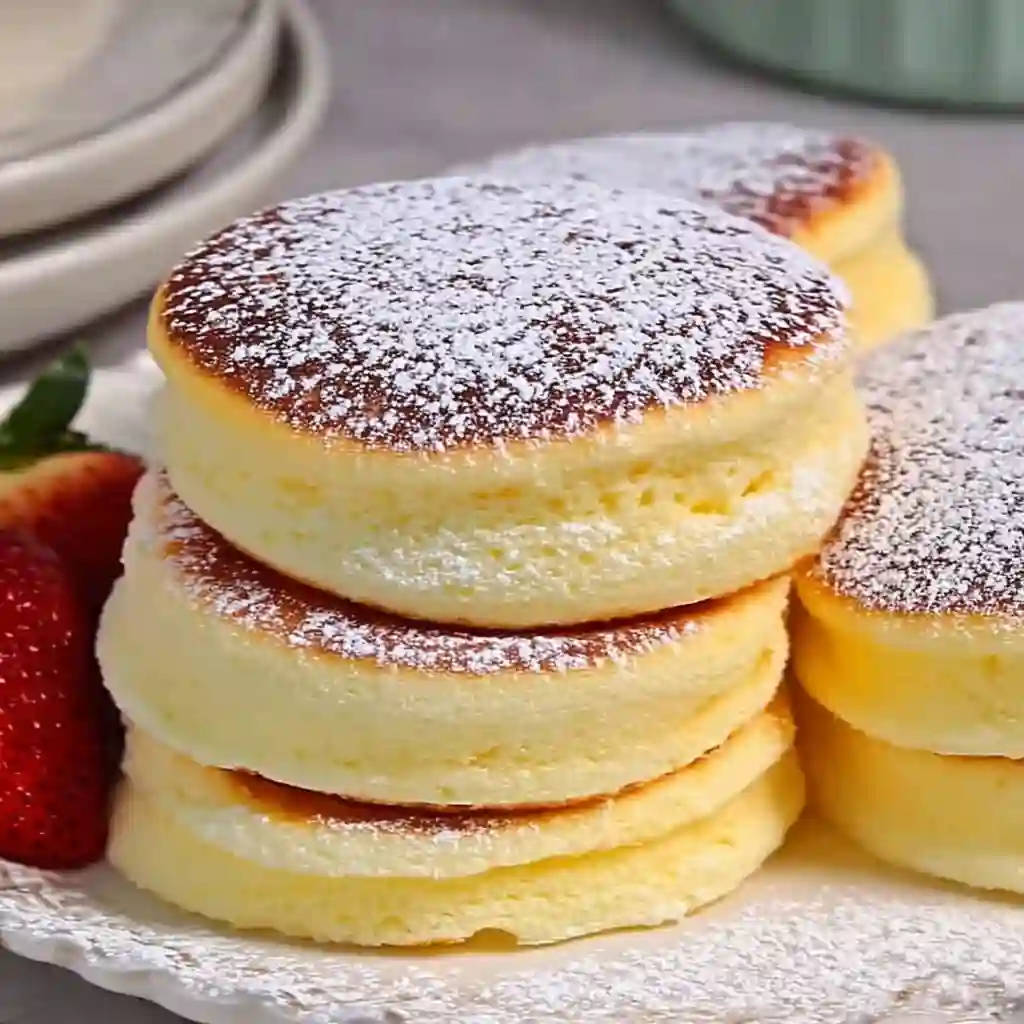
Table of Contents
The “Fuwa Fuwa” Phenomenon: More Than Just Breakfast
What Defines a True Japanese Soufflé Pancake?
To understand this dish, we must first define the texture that has captivated the culinary world. In Japanese, the term fuwa fuwa translates to “fluffy fluffy,” but this description barely scratches the surface. A true Japan Pancakes Recipe results in a structure that is less like a bread and more like a warm, set mousse.
The defining characteristic is the Jiggly Pancakes motion—a wobble that indicates the internal structure is set but incredibly delicate. This texture is achieved not by yeast or heavy amounts of baking powder, but by the mechanical incorporation of air into egg whites.
Culturally, this trend originated in the high-end cafes of Tokyo, such as Gram and Flipper’s, where customers happily wait in line for hours. It has since evolved from a niche Tokyo trend into a global symbol of Japanese Breakfast Traditional excellence.
Japanese Pancakes vs. American Pancakes vs. Traditional Soufflé
The distinction between these categories is often misunderstood. In my analysis of breakfast architectures, the primary difference lies in the leavening agent and the cooking vessel.
| Feature | American Pancake | Traditional Soufflé | Japanese Soufflé Pancakes |
| Leavening | Chemical (Baking Powder) | Mechanical (Egg Whites) | Hybrid (Mechanical + Chemical) |
| Cooking Method | Pan-Fry (Conduction) | Oven Bake (Convection) | Steam frying (Conduction + Steam) |
| Texture | Cake-like, dense | Airy, fragile | Cottony, tall, jiggly |
| Structure | Flour-dependent | Egg-dependent | Balanced matrix |
This hybrid nature is why Japanese Sweet Pancake Recipe searches have skyrocketed; they bridge the gap between a comforting breakfast item and a sophisticated, high-end dessert.
Setting Expectations: The “Immediate Serve” Rule
There is a critical constraint that I must emphasize before you begin: the ephemeral nature of the dish. Unlike Japanese Crepes or standard Mochi Pancakes Recipe, soufflé pancakes are a race against time.
The physics of a foam structure dictates that gravity will eventually win. As the air bubbles cool, the internal pressure drops, and the protein network begins to contract.
Therefore, these must be eaten within 10 to 15 minutes of leaving the pan. If you are planning Japanese Breakfast Ideas For Brunch, you must cook these to order. They cannot be staged or kept warm in an oven without drying out or collapsing.
The Science of “Fluff”: Anatomy of a Soufflé Pancake
The Physics of the Meringue (The Backbone)
The height of your pancake is entirely dependent on Meringue stability. When we whip egg whites, we are denaturing the proteins (specifically ovalbumin and conalbumin).
As the whisk agitates the mixture, these unraveled proteins bond around air bubbles, trapping them in a matrix. In my experience, the most common failure point is stopping at the wrong peak stage.
For Souffle Pancakes Recipe success, we require Meringue stiff peaks. Soft peaks are too weak to hold the heavy yolk batter, while dry, chunky over-beaten whites will not fold smoothly, leading to deflation. You are looking for a glossy, smooth peak that stands straight up like a mountain, often described as an “eagle’s beak” if it has the slightest, tiniest droop at the very tip.
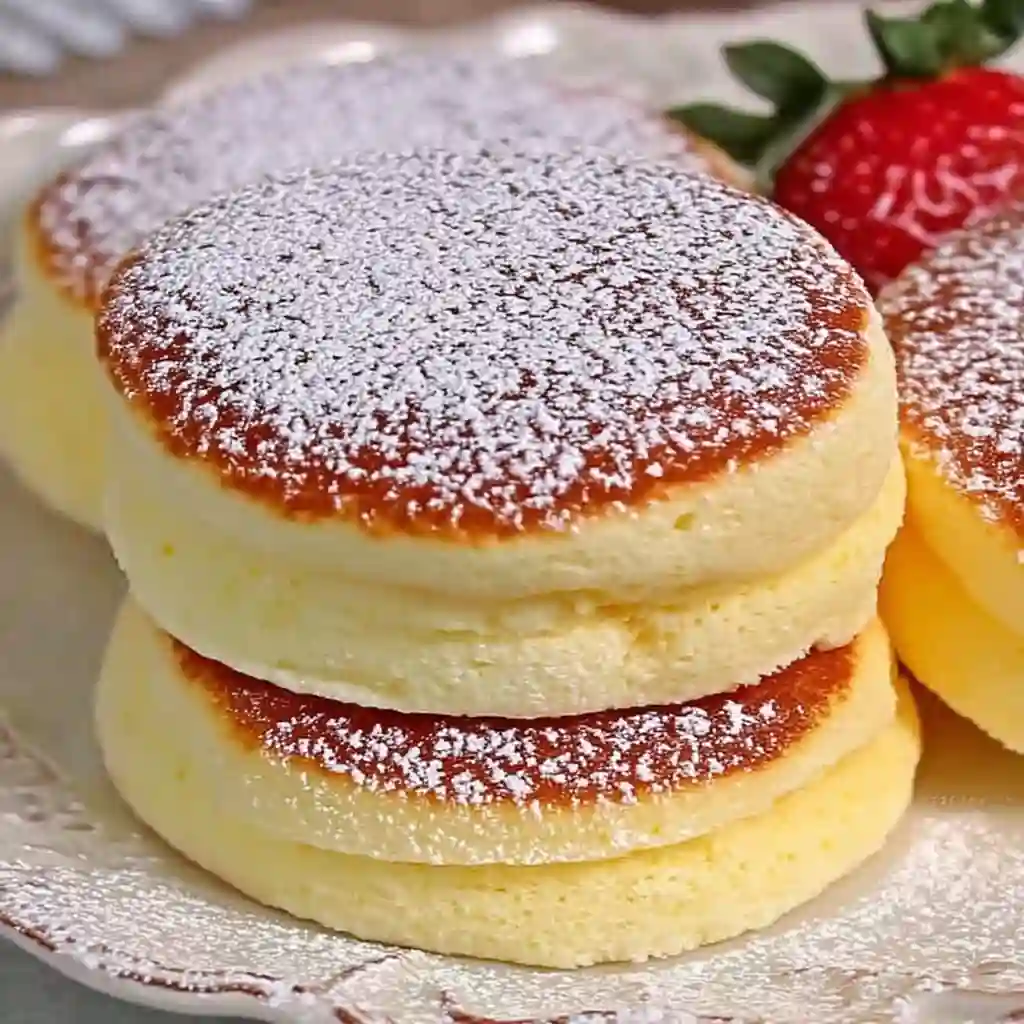
Steam-Frying: The Heat Transfer Method
Standard pancakes cook via direct conduction from the hot pan. However, because Japanese Soufflé Pancakes are so tall (often 2-3 inches), conduction alone would burn the bottom before the center is cooked.
This is where the Steam-frying technique becomes essential. By covering the pan with a lid, we trap heat, creating a “mini oven” environment on your stovetop.
We also add small amounts of water to the pan during the cooking process. This water instantly vaporizes, circulating hot steam around the sides and top of the batter towers. This ensures the Custard-like center sets gently without requiring the harsh direct heat that creates a thick crust.
Structure Stabilizers
To cheat physics and keep our Aerated batter from collapsing, we use chemical stabilizers.
Acid’s Role: I strongly recommend using a Cream of tartar substitute if you do not have the powder, such as a teaspoon of lemon juice or white vinegar. The acid lowers the pH of the egg whites, which prevents the sulfur bonds in the proteins from becoming too tight. This keeps the foam flexible and stable.
Starch’s Role: The Cake flour protein content is crucial here. The starch in the flour absorbs moisture and gelatinizes during cooking, reinforcing the walls of the air bubbles. This is why we can flip them without total collapse the flour acts as the scaffolding for the egg white “drywall.”
Essential Ingredients for Japanese Soufflé Pancakes
The Egg Debate: Freshness Matters
The foundation of this Japanese Food Recipes Breakfast is the egg. Fresh eggs have a more acidic pH and tighter proteins, making them harder to whip but significantly more stable once aerated.
I advise separating your eggs while they are cold, as the yolk is less likely to break. However, allow the whites to come to room temperature before whipping. Warmer egg whites have lower Surface tension, allowing them to whip up to a greater volume.
Yolk to White Ratio: Most recipes call for more whites than yolks (e.g., 2 yolks to 3 whites). This reduces the fat content (which inhibits foam) while maximizing the lifting power.
Flour Selection: Cake Flour vs. All-Purpose Flour
This is a non-negotiable variable in my kitchen. You must understand the difference in Cake flour vs All purpose flour.
All-purpose flour has a protein content of 10-12%, which leads to Gluten formation. Gluten creates “chew,” which is desirable for bread but disastrous for a meltingly soft pancake.
Cake flour has a protein content of 6-8%. If you cannot find it, I use a simple DIY Hack: For every cup of All-Purpose flour, remove two tablespoons and replace them with cornstarch. The cornstarch inhibits gluten development, mimicking the tenderness of true cake flour.
The Lift Agents
Double-acting baking powder is your insurance policy. While the meringue does 80% of the heavy lifting, the baking powder provides a secondary chemical rise when exposed to heat.
This ensures that even if your folding technique is slightly imperfect, you will still achieve a respectable height.
Sugar: Use superfine sugar if possible. Large granules of granulated sugar take longer to dissolve and can weigh down the delicate foam. The sugar does not just add sweetness; it is hygroscopic, holding onto water and delaying the coagulation of the egg proteins, which prevents the “scrambled egg” texture.
Milk and Flavorings
I prefer Hokkaido milk or whole milk for its fat content, which adds richness to the small amount of yolk batter.
Vanilla extract is mandatory, not optional. Eggs naturally contain sulfur, and when cooked slowly in a sealed environment, that “eggy” aroma can become concentrated. Vanilla neutralizes this, ensuring your Japanese Pudding-like pancakes smell like a bakery, not an omelet.
Critical Equipment for Success
The Pan: Non-Stick is Non-Negotiable
Do not attempt this with stainless steel or cast iron unless they are seasoned to perfection. The high sugar and protein content makes this batter incredibly sticky.
If the pancake sticks to the pan, the delicate structure will tear when you attempt to flip it, causing immediate deflation. A high-quality Non-stick skillet or an electric griddle with a lid is required.
Ring Molds vs. Freehand Technique
There is a significant debate in the community regarding Soufflé Pancake without mold versus using metal rings.
The Ring Mold Method: This produces the perfect, cylindrical shapes you see on Instagram. However, the friction from the metal ring can sometimes hinder the rise if not greased perfectly.
The Freehand “Tower” Method: This is the technique I teach. By stacking scoops of batter vertically, you achieve a rustic, cloud-like shape. It requires more skill in Batter viscosity management but results in a lighter texture because the sides are open to the steam.
The Unsung Hero: The Kitchen Scale
Precision is the enemy of failure. Volume measurements are notoriously inaccurate for baking.
A cup of flour can vary by 20% depending on how it is scooped. In a recipe that relies on the ratio of water to starch to protein, this variance is unacceptable.
For consistent Japanese Breakfast Recipes Easy, use a digital gram scale. Weighing your liquids and solids ensures that your batter has the exact consistency required to hold its shape in the pan.
Step-by-Step Masterclass: How to Make Japanese Soufflé Pancakes
Step 1: The Yolk Base Preparation
Begin by whisking your egg yolks with the milk and vanilla until the mixture is pale and frothy. This emulsification step is vital for a uniform crumb.
Sift your cake flour and baking powder directly into this bowl. Never skip sifting. Clumps of flour will not hydrate in time during the short cooking process, leaving you with pockets of dry powder in your Pancake Recipe Japanese. Whisk until just combined—do not overwork it.
Step 2: The Meringue (The High-Stakes Step)
In a pristine, grease-free bowl, begin whipping your egg whites on low speed. Once they become foamy, add your cream of tartar (or lemon juice).
Increase speed to medium-high and add the sugar in three separate batches. Adding sugar all at once crushes the air bubbles.
Continue whipping until you reach Meringue stiff peaks. You should be able to turn the bowl upside down without the whites moving. If they slide, keep whipping. If they look chunky like styrofoam, you have gone too far (over-coagulated) and must start over.
Step 3: The Folding Technique
This is the moment of truth. Take one scoop of the meringue and whisk it vigorously into the yolk batter. This is the “Sacrificial Scoop.”
Its purpose is to lighten the density of the yolk mixture so it matches the meringue. Now, pour the yolk mixture into the remaining meringue.
Switch to a spatula and use the “J-Motion”: cut down the center, scoop up the bottom, and fold over. Rotate the bowl and repeat. Fold gently. You are trying to incorporate the two mixtures without popping the millions of tiny balloons you just created. Stop as soon as the yellow streaks disappear.
Step 4: Cooking and Stacking
Preheat your pan on the lowest possible setting for at least 5 minutes. Consistent, low heat is the secret to Slow cooking.
Using an ice cream scoop or ladle, place one mound of batter into the pan. Wait approximately one minute for the bottom to set slightly, then stack a second scoop directly on top of the first. This “towering” technique gives the Japanese Pancake its immense height.
Add 1 tablespoon of water to the empty spaces in the pan (not touching the batter) and cover immediately with the lid. Cook for 4-5 minutes.
Step 5: The Flip
When the time is up, the bottoms should be golden brown, and the tops should look matte, not glossy wet.
Gently roll the pancake over. Do not slap it down. Add a little more water, cover, and cook for another 3-4 minutes. The goal is a Japanese Pancake Dessert Recipes masterpiece that wobbles but stands tall.
Troubleshooting: Why Did My Soufflé Pancakes Deflate?
Problem: The “Sad Flat Pancake” (Immediate Deflation)
If your pancakes spread into thin puddles the moment they hit the pan, your meringue was too soft. You did not whip enough air into the protein structure.
Alternatively, you may have over-mixed during the folding stage. Remember, every fold pops bubbles. Efficiency is key to maintaining Pancake height.
Problem: Burnt Outside, Raw Inside
This is a classic thermodynamic error. Your heat was too high. The sugar in the batter caramelized (burned) before the heat could penetrate the foamy interior.
The solution is to trust the steam. Keep the heat on minimum and rely on the lid to circulate heat. If you find your stove runs hot, you may need a heat diffuser.
Problem: The “Mushroom” Shape
Sometimes the batter spreads too thin at the base before you can stack the second layer.
I recommend chilling your batter for 2 minutes before cooking. A colder batter has higher viscosity and holds its shape better on the hot pan. Also, ensure you are letting the first scoop “set” for a minute before adding the second layer.
Problem: Eggy Taste
If your Fluffy Japanese Pancakes Recipe tastes like an omelet, it is usually due to undercooking.
When the proteins are not fully set, the sulfur compounds are more volatile. Ensure you cook them for the full duration. Adding a slightly larger splash of vanilla or serving with acidic fruits can also mask this potential issue.
Flavor Variations & Serving Suggestions
Flavor Infusions (In the Batter)
Once you master the base, you can experiment. For Matcha Soufflé Pancakes, replace 1 tablespoon of flour with high-quality matcha powder. The earthiness pairs beautifully with the sweet cream.
For chocolate lovers, cocoa powder is heavy and contains fats that can destabilize meringue. Use it sparingly, or better yet, fold in chocolate shavings.
Ube (purple yam) is another popular variant. I suggest using Ube extract rather than powder for the most vibrant color without altering the flour chemistry.
Topping Strategy
While Japan Breakfast culture appreciates simplicity, toppings can elevate the dish.
Classic: A dusting of powdered sugar and a drizzle of maple syrup. This highlights the egg flavor.
Cafe Style: A dollop of Chantilly cream (sweetened whipped cream with vanilla), fresh strawberries, and perhaps some boba pearls for texture contrast.
Savory: For the adventurous, try How To Make Japanese Pancakes savory by omitting the vanilla and serving with ricotta cheese and crispy bacon. The texture of the soufflé works surprisingly well with salt and fat.
More easy Recipes To Try!
Creamy Garlic Parmesan Chicken Pasta
Strawberry Crunch Cheesecake Tacos
Frequently Asked Questions (FAQ)
What is the difference between Japanese pancakes and soufflé pancakes?
While often used interchangeably, “Japanese Pancakes” can sometimes refer to the thick, ring-mold cooked hotcakes that are dense like a sponge cake. Soufflé pancakes, specifically, rely on the separated egg method and are significantly lighter, airier, and more fragile.
What is in Japanese soufflé pancakes?
The recipe is deceptively simple. It consists of the “Big 4”: Eggs, Sugar, Flour, and Milk. The magic lies in the treatment of these ingredients specifically the separation of the egg and the stabilization of the whites with acid (cream of tartar).
How do the Japanese get their pancakes so fluffy?
The fluffiness comes from the mechanical aeration of egg whites (meringue) combined with the Steam-frying method. By trapping steam, the pancake rises rapidly and sets without drying out, maintaining a moist, cloud-like interior.
Are Japanese soufflé pancakes worth it?
In my professional opinion, yes. While they require high effort and precise timing, the texture is unlike anything else in the culinary world. It is an experience that cannot be replicated by store-bought mixes or standard diners.