
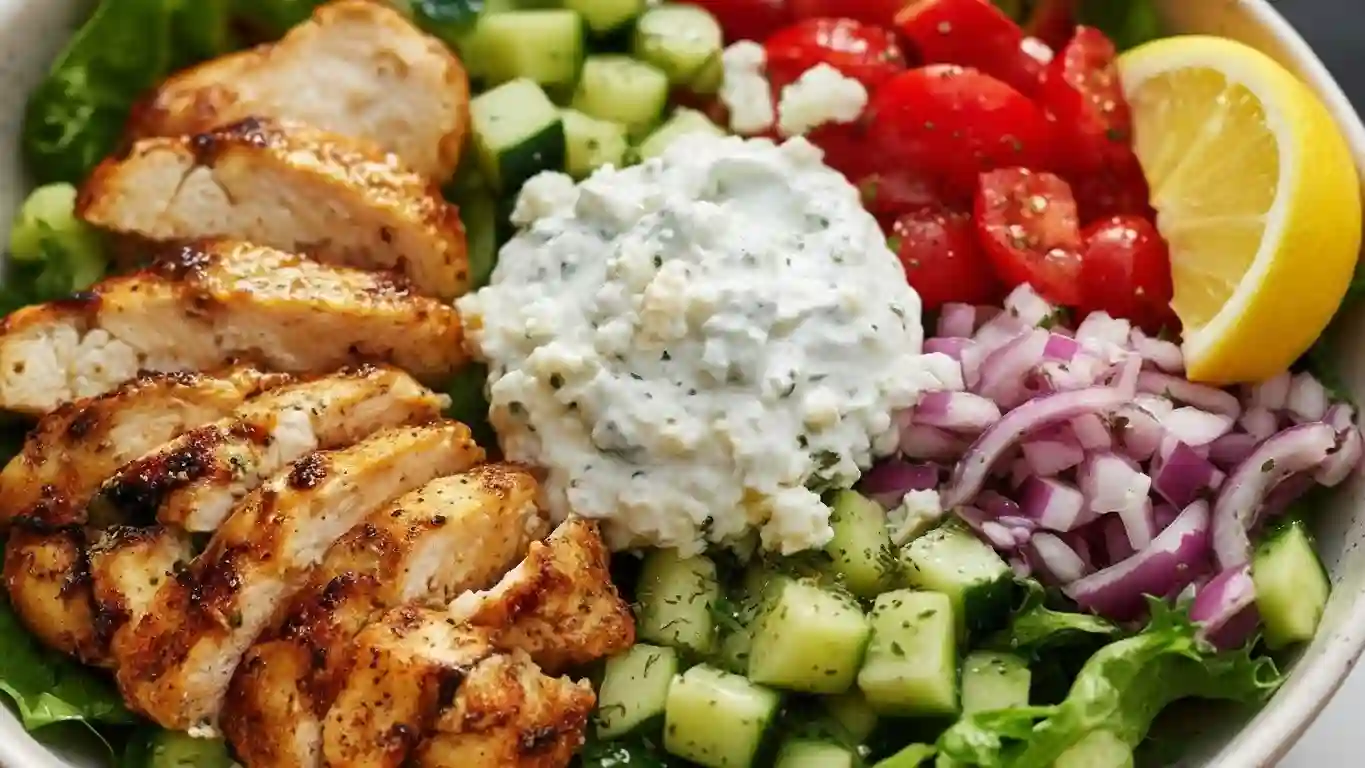
Greek Chicken Bowls are the epitome of high-performance nutrition meeting culinary excellence, offering a perfect balance of lean protein, complex carbohydrates, and vibrant vegetables.
This guide provides a scientifically grounded approach to mastering Healthy Greek Chicken Meal Prep, ensuring flavor retention and macro-nutrient optimization. Ideal for busy professionals seeking Mediterranean Chicken Bowl Recipe solutions, this resource delivers actionable techniques for maintaining freshness and texture over several days.
Greek Chicken Bowls

Equipment
- Air fryer or skillet
- Mixing bowls
- Whisk
- Knife and cutting board
- Measuring spoons and cups
Ingredients
Chicken Marinade
- 4 small chicken breasts about 1¼ pounds, pounded to ½-inch thick
- ¼ cup olive oil
- 1 tbsp lemon zest
- 2 tbsp lemon juice
- 2 tbsp honey
- 1 tsp garlic powder
- 1½ tsp dried oregano
- 1½ tsp dried basil
- 1 tsp salt
- ¼ tsp black pepper
- ½ tsp red pepper flakes optional, for spice
Bowls
- 2 cups cooked rice or quinoa for base
- 2 cups grape or cherry tomatoes halved
- 2 cups cucumber diced or chopped
- 4 cups romaine lettuce shredded
- 1 cup red onion sliced
- ½ cup feta cheese optional, use vegan feta for dairy-free
Tzatziki Sauce
- 1 cup plain Greek yogurt
- ½ cup grated cucumber
- 1 tbsp lemon juice
- 1 tbsp olive oil
- 1 tsp minced garlic
- ¼ tsp salt or to taste
- 1 tbsp fresh dill chopped
Instructions
- In a bowl, whisk together olive oil, lemon zest, lemon juice, honey, garlic powder, oregano, basil, salt, pepper, and red pepper flakes. Add chicken breasts and marinate for at least 30 minutes (up to several hours).
- Meanwhile, prepare tzatziki by combining Greek yogurt, grated cucumber, lemon juice, olive oil, garlic, salt, and dill in a small bowl. Mix well and refrigerate until ready to serve.
- Cook rice or quinoa for the base. Optionally, season with lemon juice, parsley, salt, and olive oil.
- Preheat air fryer to 380°F (190°C). Cook marinated chicken for 7 minutes per side, or until internal temperature reaches 165°F. Alternatively, cook in a skillet over medium heat for 7–8 minutes per side until golden and cooked through.
- Let the chicken rest for 5 minutes before slicing.
- Assemble bowls with a layer of rice or quinoa, followed by lettuce, tomatoes, cucumber, and red onion. Add sliced chicken on top and spoon over tzatziki sauce.
- Drizzle with olive oil and lemon juice or optional tahini dressing. Garnish with feta and serve immediately.
Notes

Table of Contents
Why These Greek Chicken Bowls Are Better Than Takeout
Beating the “Sad Desk Lunch” with Fresh Mediterranean Flavors
I distinctly recall the summer my neighbor, Madame Dubois, a spirited French woman with an impeccable palate, invited me over for lunch. While she was French, her appreciation for the Mediterranean coastline knew no borders. She watched me unpacking a sad, wilting container of store-bought salad and shook her head with a mixture of pity and resolve.
“Food,” she told me, pointing a wooden spoon at my plastic container, “must be alive, even if it is for later.” That afternoon, she showed me how to assemble a bowl where every element, from the fresh dill to the crisp peppers, maintained its integrity.
That lesson changed how I view the midday meal. We often settle for convenience at the expense of quality, paying a premium for “healthy” takeout bowls from chains like Cava or Sweetgreen that are often laden with hidden sodium and preservatives.
By creating your own Greek Chicken Bowls at home, you reclaim control over the quality of your fuel. This isn’t just about saving money, though the cost difference is substantial; it is about the vibrancy of the food.
Unlike the limp lettuce and dry meat often found in mass-produced lunches, this easy clean eating approach ensures that your Thursday lunch tastes as vibrant as Monday’s dinner.
The secret lies in the freshness of the Horiatiki salad components and the chemical tenderization of the meat, which we will discuss in depth. This is the antidote to the “sad desk lunch,” a meal that you genuinely look forward to eating.
The Nutritional Powerhouse of Greek Chicken Bowls
From a nutritional perspective, this bowl is a masterclass in balance. It is designed to provide sustained energy without the heavy crash often associated with refined carbohydrates.
The foundation of Greek Bowls Healthy eating lies in the macronutrient distribution. You receive a substantial serving of high-quality protein from the chicken and Greek yogurt, which is essential for muscle repair and satiety.
Simultaneously, the healthy fats derived from Extra virgin olive oil, Kalamata olives, and Crumbled feta cheese support cognitive function and nutrient absorption.
Unlike restrictive diets, this Mediterranean bowl recipe embraces complex carbohydrates. Whether you choose quinoa or brown rice, you are fueling your body with fiber that aids digestion and regulates blood sugar levels.
Furthermore, the diversity of vegetables introduces a wide spectrum of micronutrients. The peppers provide Vitamin C, the spinach offers iron, and the garlic delivers potent antioxidant properties.
This is clean eating in its most practical form. It is a High Protein Meal Prep solution that doesn’t feel like a compromise, satisfying both the biological need for fuel and the psychological need for flavor.

Essential Ingredients for Authentic Greek Chicken Bowls
Chicken Thighs vs. Breasts: Choosing the Best Protein
When I prepare this dish, I almost exclusively reach for Boneless skinless chicken thighs. While the fitness industry has long championed the chicken breast for its leanness, the thigh is the superior choice for meal prep.
Chicken thighs contain a slightly higher fat content, which acts as a buffer during the reheating process. When you microwave a chicken breast days after cooking, the protein fibers tend to tighten and expel moisture, resulting in a rubbery texture.
Thighs, however, remain forgiving. They retain their succulence and flavor even after being reheated, making them the gold standard for Greek Chicken Dinner preps that need to last through the week.
However, if you are strictly monitoring caloric density and prefer Baked Chicken Breast, the marinade becomes non-negotiable. We will cover how to keep breast meat juicy, but for the optimal gastronomic experience, thighs are my recommendation.
Regardless of the cut, ensuring the meat reaches an Internal temperature (165°F) is critical for safety, but going significantly beyond that will ruin the texture of white meat.
The Base Layers: Rice, Quinoa, or Cauliflower Rice
The canvas of your bowl determines its textural profile. I personally prefer a base of nutty brown rice or quinoa, as they hold up remarkably well against the dressing without becoming mushy.
For those adhering to a standard diet, these grains provide the necessary carbohydrate load for energy. Greek Rice Bowl preparations benefit from cooking the rice in vegetable broth rather than plain water for an added layer of savoriness.
However, adaptability is a key feature of this recipe. If you are following a High protein low carb or ketogenic protocol, the substitution is seamless.
Cauliflower rice, sautéed quickly with a touch of lemon zest and garlic, mimics the mouthfeel of grains while drastically reducing the glycemic load.
I have also found that a bed of massaged kale or sturdy romaine works beautifully for a lighter Greek Salad Bowl version, perfect for days when you want to minimize heaviness.
Fresh Vegetable Components for the Horiatiki Salad
The integrity of your vegetables is what separates a soggy failure from a crisp success. In my kitchen, I strictly use Persian cucumbers or English cucumbers for this recipe.
Standard slicing cucumbers contain high water content and large seeds that release liquid over time, turning your healthy bowls into a watery mess by Wednesday. Persian cucumbers are denser, crunchier, and have minimal seeds.
Similarly, the choice of cheese matters. I always advise buying a block of feta in brine. Pre-crumbled feta is often coated in anti-caking agents like cellulose, which prevents it from having that creamy, authentic texture.
When you crumble fresh feta yourself, you get moist, tangy chunks that truly elevate the Greek Turkey Bowls or chicken bowls you are assembling.
Don’t forget the Kalamata olives. Their brine adds a depth of salinity that salt alone cannot achieve. If you are watching sodium, a quick rinse under cold water retains the flavor while washing away excess brine.
The Science of the Yogurt Marinade
Why Yogurt Marinades Create the Juiciest Greek Chicken
I am fascinated by the chemistry of cooking, and the Authentic Greek Chicken Marinade is a perfect example of enzymatic activity at work.
Many people make the mistake of marinating strictly with vinegar or lemon juice. While these acids flavor the meat, they can be harsh. Highly acidic marinades can denature the protein bonds on the surface of the chicken too quickly, leading to a texture that is mushy on the outside and rubbery within.
Yogurt, however, operates differently. It contains lactic acid and calcium. The lactic acid reacts with the meat more gently than the citric acid found in lemons.
This allows for a slower, more penetrating tenderization process. The calcium in the yogurt also activates enzymes within the meat that help break down fibers.
The result is chicken that is incredibly tender and remains moist during the high heat of cooking. This is the secret to a Chicken Gyro Bowl that tastes authentic.
Additionally, the sugars and proteins in the dairy solids caramelize beautifully when grilled or seared, creating a delicious crust that oil-based marinades struggle to replicate.
Key Spices for that Signature Greek Flavor Profile
To achieve that quintessential Greek Bowl Recipe taste, the spice blend must be robust. I use a generous amount of dried oregano, specifically Greek oregano if you can source it, as it has an earthier, more pungent profile.
Garlic cloves, fresh and minced, are non-negotiable. Powdered garlic has its place, but for the marinade, the oils from fresh garlic penetrate the meat more effectively.
I also incorporate lemon zest rather than just the juice. The zest contains essential oils that provide a bright, floral citrus aroma without the acidity that cooks the meat prematurely.
A splash of Red wine vinegar adds the necessary tang. I always recommend crushing dried herbs like oregano between your palms before adding them to the bowl.
This friction warms the herbs and releases their dormant oils, significantly amplifying the fragrance of your Greek Chicken Bowls.
Step-by-Step Cooking Methods (Air Fryer, Stove, or Grill)
Pan-Searing for Golden Crispy Edges
If I am cooking indoors, the cast-iron skillet is my tool of choice. To get that Gyro style chicken char, you need high heat.
I heat Extra virgin olive oil until it shimmers. The key is not to overcrowd the pan. If you pack the chicken pieces too tightly, they will steam in their own juices rather than sear.
Cook the chicken undisturbed for 5 to 6 minutes on the first side. This patience allows the Maillard reaction to occur, the chemical browning that equals flavor.
Flip only when the meat releases easily from the pan. This method is perfect for protein dinner preparations where flavor depth is the priority.
Be mindful of the garlic in the marinade; if the heat is too aggressive, it can burn. Medium-high is usually the sweet spot for achieving Caramelization without charring the aromatics.
How to Make Air Fryer Greek Chicken Bowls
For speed and convenience, the air fryer is unbeatable. It mimics the convection of a roasting oven but with greater intensity, making it ideal for easy clean eating recipes.
I set my air fryer to 380°F (190°C). Arrange the marinated chicken in a single layer, ensuring air can circulate around each piece.
Cook for approximately 10 to 12 minutes for thighs, flipping halfway through. The rapid air circulation crisps the yogurt marinade, creating a texture similar to rotisserie skin.
This method is incredibly efficient for batch cooking. You can process large quantities of protein in cycles while you prep your vegetables, streamlining your Healthy Meal Prep workflow.
Always check the Internal temperature (165°F) with a meat thermometer to ensure safety without overcooking.
Grilling Tips for Smoky Mediterranean Flavor
In the warmer months, grilling is my preferred method. The smoke adds a layer of complexity that pairs wonderfully with the fresh Tzatziki sauce.
Preheat your grill to medium-high. Because the marinade is yogurt-based, it can stick to the grates if they aren’t properly oiled.
I recommend wiping the grates with a high-smoke-point oil before placing the chicken down. Grill for about 5 to 6 minutes per side.
The char marks you get from the grill enhance the Mediterranean Chicken Bowl Recipe aesthetic and flavor.
Let the chicken rest for at least 5 minutes before slicing. This allows the juices to redistribute throughout the meat rather than running out onto your cutting board.
Preparing the Homemade Tzatziki Sauce
A Homemade Tzatziki Sauce is the soul of this dish. Store-bought versions often contain thickeners and lack the bite of fresh garlic.
The most critical step in making tzatziki is water management. Cucumbers are over 95% water.
After grating your Persian cucumbers, place them in a clean kitchen towel or cheesecloth and squeeze aggressively.
You will be shocked at how much liquid comes out. If you skip this step, the water will leech out later, separating your yogurt and ruining the creamy consistency.
Mix the drained cucumber with thick Greek yogurt, fresh dill, lemon juice, minced garlic, and a pinch of salt. Let it sit in the fridge for 30 minutes before serving to let the flavors meld.
Assembly and Strategic Meal Prep Storage
The “Cool Down” Rule Before Packing
One of the most common mistakes I see in meal prep clean eating is packing food while it is still hot.
If you place hot chicken and rice into a container and seal the lid, steam gets trapped. This condensation drips back down onto the food, creating a breeding ground for bacteria and making your grains soggy.
I always spread my cooked rice and chicken out on a baking sheet or large plates to cool rapidly to room temperature.
Only once the components have stopped steaming do I begin the assembly process. This simple patience significantly extends the shelf life of your Chicken Bowl Recipe.
Layering Your Greek Chicken Bowls to Prevent Sogginess
To keep your Greek Bowls Healthy and appetizing by day four, you must layer strategically.
I utilize the “Divider Method.” If you have bento-style containers with separate compartments, those are ideal.
If using a standard single-compartment container, place the hearty ingredients, the rice and chicken, at the bottom or on one side.
Place the “wet” or cold ingredients, the cucumber salad, tomatoes, and tzatziki, in a silicone muffin liner or a small separate jar nested inside.
This prevents the acidic dressing and cucumber water from soaking into your rice and making it mushy. It keeps the nutrient-dense vegetables crisp until you are ready to eat.
Reheating Instructions for Maximum Freshness
When it is time to eat, removing the cold components is essential. You want your chicken and rice warm, but your Horiatiki salad and tzatziki should remain cold.
If you used the divider method, simply lift out the silicone cup or small jar containing the salad and sauce.
Microwave the chicken and grain base for 90 seconds to 2 minutes.
Once heated, tip the cold salad components back over the warm bowl and drizzle with the sauce. This contrast between hot and cold, savory and fresh, mimics the experience of a freshly made Greek Chicken Dinner.
Dietary Variations and Customizations
Dairy-Free and Vegan Greek Bowl Alternatives
For those who cannot consume dairy, this Chicken Bowl Ideas guide is easily adaptable.
To replicate the Homemade Tzatziki Sauce without dairy, I have had great success using unsweetened coconut yogurt or a cashew-based cream. The key is to add extra lemon and dill to mask any slight coconut flavor.
For a vegan protein source, chickpeas are a fantastic substitute. Toss chickpeas in the same oregano and garlic spices and roast them until crispy.
Firm tofu also absorbs the lemon-herb flavors beautifully. These gluten-free meal prep adjustments ensure everyone can enjoy the flavors of the Mediterranean.
Low-Carb and Keto Greek Chicken Bowls
If you are following a ketogenic lifestyle, the rice base is the only element that needs modification.
I often prepare Greek Turkey Bowls or chicken bowls over a generous bed of mixed greens, effectively turning it into a hearty salad.
Alternatively, cauliflower rice is a staple for High Protein Meal Prep in the low-carb community.
By increasing the amount of Extra virgin olive oil in your dressing and adding avocado, you can hit your fat macros while keeping carbohydrates minimal. This flexibility makes the recipe a staple for various health dinner plans.
Frequently Asked Questions
Common Queries About Greek Chicken Meal Prep
As a food writer, I receive many questions about the longevity and safety of meal prep. A frequent question is:
“How long to marinate Greek chicken?”
Ideally, 4 to 12 hours is the sweet spot. If you leave it longer than 24 hours, the yogurt and acid can start to break down the meat too much, affecting the texture.
Another common query is regarding the sauce: “Dairy-free tzatziki sauce recipe” requests are frequent. As mentioned, plant-based yogurts work well, provided they are thick and unsweetened.
People often ask, “Best rice for Greek bowls”?
While brown rice is nutritious, basmati rice offers a fragrance that pairs wonderfully with Greek flavors.
Finally, “How to keep Greek salad fresh for meal prep” is best answered by keeping the dressing separate until the very last moment.
What vegetables go well in a Greek bowl?
Beyond the classics, roasted red peppers, artichoke hearts, and zucchini are excellent additions.
Is this recipe gluten-free?
Yes, provided you ensure your spices are certified GF and you skip the pita bread or use a GF alternative.
Can I use rotisserie chicken for this bowl?
Absolutely. If you are short on time, using pre-cooked rotisserie chicken is a valid shortcut. Simply toss the shredded meat in a little lemon juice and oregano to refresh the flavor.
Conclusion
Elevate Your Weekly Menu
Incorporating these Greek Chicken Bowls into your routine is more than just a culinary choice; it is a commitment to fueling your body with respect. The vibrant colors, the robust flavors, and the nutritional profile make it a superior alternative to any fish dinner recipes or takeout options you might default to.
I encourage you to try this recipe this week. The effort you put into chopping fresh vegetables and marinating the chicken will pay dividends in energy and satisfaction.
Don’t forget to snap a photo of your meal prep lineup! I love seeing your creations, so please tag my blog on Instagram when you post your healthy bowls recipes.
Download the grocery list printable below to ensure you have everything you need for easy healthy meals all week long.
More easy Recipes To Try!
Strawberry Crunch Cheesecake Tacos
FAQs Section
How long does marinated Greek chicken last in the fridge?
Raw chicken marinating in the yogurt mixture should not be kept for more than 24 hours, as the acidity can degrade the meat’s texture. Once cooked, the Greek Chicken Dinner meat will last safely in an airtight container in the refrigerator for 3 to 4 days.
What vegetables go well in a Greek bowl?
Sturdy vegetables are best for healthy meal prep. Persian cucumbers, cherry tomatoes, red onions, and bell peppers hold up well. Roasted vegetables like zucchini, eggplant, and chickpeas are also excellent additions. Avoid delicate lettuces if you are pre-assembling the bowls days in advance.
Is Tzatziki sauce healthy?
Yes, Tzatziki is a very healthy condiment. It is based on Greek yogurt, which is rich in protein and probiotics, and includes healthy fats from olive oil. It is significantly lower in calories and fat compared to mayonnaise-based dressings, making it ideal for Greek Bowls Healthy plans.
Can I freeze Greek Chicken Bowls?
You can freeze the cooked chicken and the rice components successfully for up to 3 months. However, do not freeze the fresh cucumber salad, feta cheese, or the tzatziki sauce, as the freezing process will ruin their texture and cause the dairy to separate.