
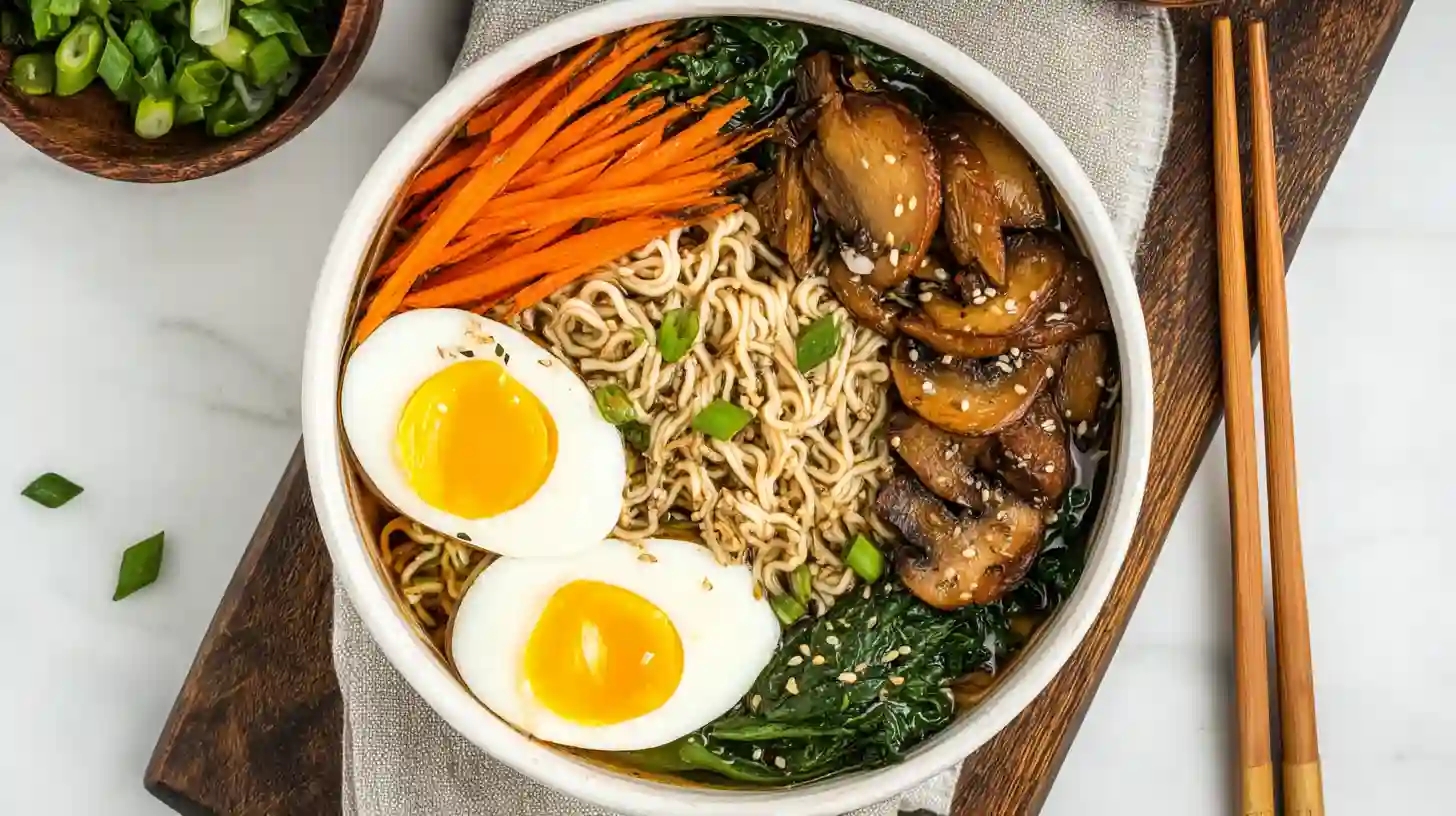
When I first moved to France, I found myself missing the comfort of a good bowl of ramen the kind that wraps you up on a cold day and feels like a warm hug. But with gluten off the table for health reasons, I had to get creative. This gluten-free ramen recipe came out of my tiny Paris kitchen after weeks of testing. It’s the bowl I now crave when I want something soothing but still light and nourishing.
If you’ve been hunting for a way to enjoy ramen without gluten, you’re in the right place. This recipe keeps all the depth and richness of the original but skips the gluten entirely no wheat noodles, no soy sauce surprises. Just pure, slurp-worthy satisfaction.
What Exactly is Ramen? (A Quick Introduction)
Ramen is a beloved Japanese noodle soup made with a rich broth, springy noodles, and a variety of toppings. It’s warm, savory, and endlessly customizable.
Traditional ramen isn’t gluten-free. The noodles are usually made from wheat flour, and the broth often includes soy sauce that contains wheat. This makes it off-limits for those avoiding gluten.
The good news? You can absolutely make a version at home that tastes just as comforting. With the right ingredients and a few smart swaps, gluten-free ramen can be just as rich and satisfying as the original. You won’t miss the wheat.
Ingredients Needed for Gluten Free Ramen
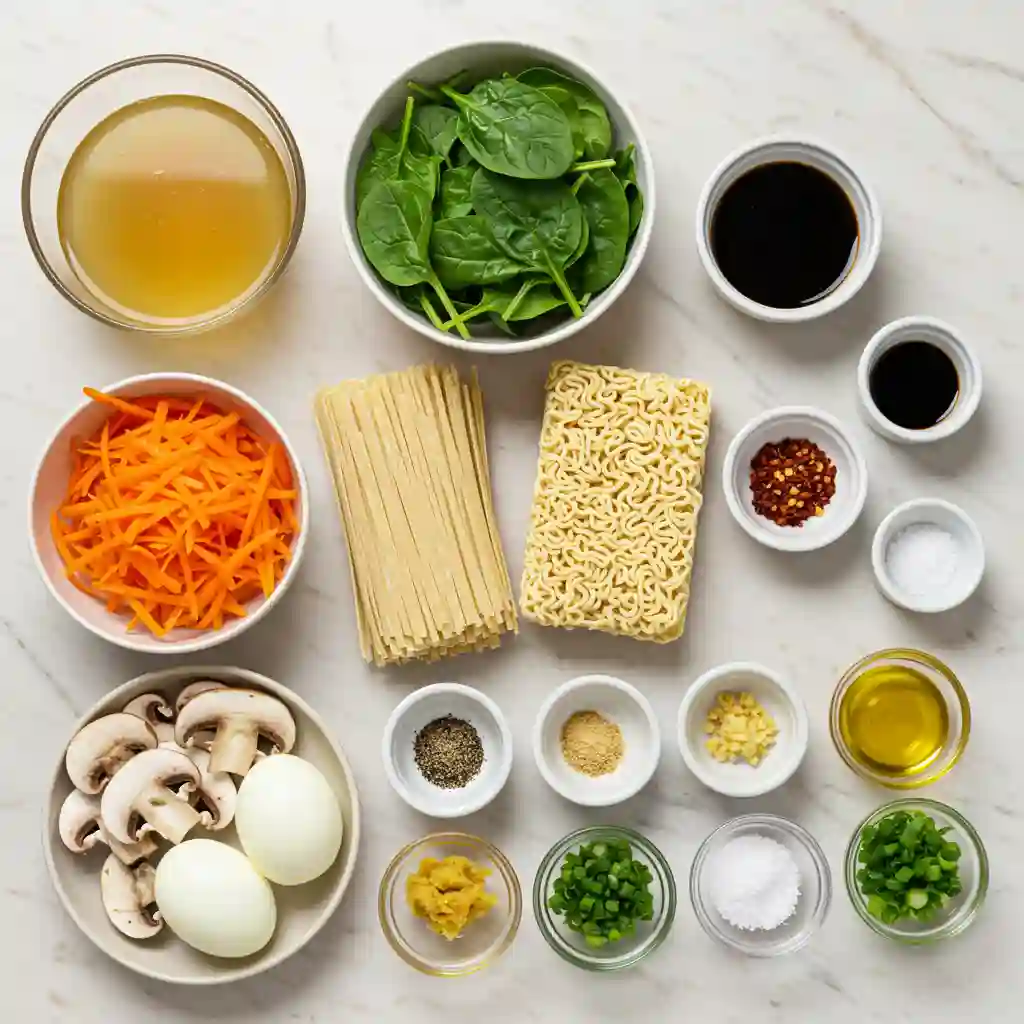
To build the perfect bowl of gluten-free ramen, gather everything ahead of time. Grouped below are the components you’ll need for the noodles, broth, vegetables, and toppings.
For the Noodles
- 2 cakes of gluten-free ramen noodles
For the Vegetables
- 1 large carrot, peeled and cut into thin strips
- 1 cup cremini or button mushrooms, sliced
- 1 cup packed baby spinach leaves
For the Flavor Base
- 1 tablespoon extra virgin olive oil
- 2 teaspoons minced garlic
- Half a teaspoon grated fresh ginger
For the Broth
- 2 cups low-sodium chicken broth
- 1 tablespoon gluten-free soy sauce (tamari recommended)
- Half a teaspoon onion powder
- Half a teaspoon salt
- One quarter teaspoon ground black pepper
For the Toppings
- 2 soft-boiled eggs, peeled and sliced in half
- 2 tablespoons sliced green onions
- One quarter teaspoon crushed red pepper flakes (optional for heat)
Each ingredient plays a role in balancing flavor and texture. Keep your prep clean and simple to let the broth and noodles shine.
How to Make Gluten Free Ramen
Follow these clear steps to create a satisfying gluten-free ramen bowl packed with flavor and texture.
1. Boil the noodles
Fill a medium pot with water and bring it to a full boil. Add the gluten-free ramen noodles and cook according to package instructions, usually around 3 minutes until tender.
2. Rinse and set aside
Drain the noodles and immediately rinse them under cold water. This stops the cooking process and prevents them from turning mushy. Set the noodles aside while you prepare the rest.
3. Sauté the vegetables
In a large skillet, heat the olive oil over medium heat. Add the sliced carrots, mushrooms, spinach, garlic, and ginger. Cook for 4 to 6 minutes until the vegetables soften. The mushrooms will shrink, the spinach will wilt, and the carrots will become slightly tender.
4. Set the veggies aside
Transfer the cooked vegetables to a plate and keep them warm.
5. Make the broth
In the same skillet, pour in the chicken broth. Add the gluten-free soy sauce, onion powder, salt, and black pepper. Bring the mixture to a boil, then reduce the heat and let it simmer for 5 minutes to blend the flavors.
6. Assemble the bowls
Divide the cooked noodles between two bowls. Pour the hot broth over the noodles in each bowl.
7. Add toppings
Top each bowl with the sautéed vegetables. Place a halved soft-boiled egg on top. Sprinkle with sliced green onions and crushed red pepper flakes if you like some heat.
Each step builds flavor and texture. Cooking noodles separately and rinsing them properly ensures a better final dish. The result is a warm, gluten-free ramen that feels homemade and comforting.
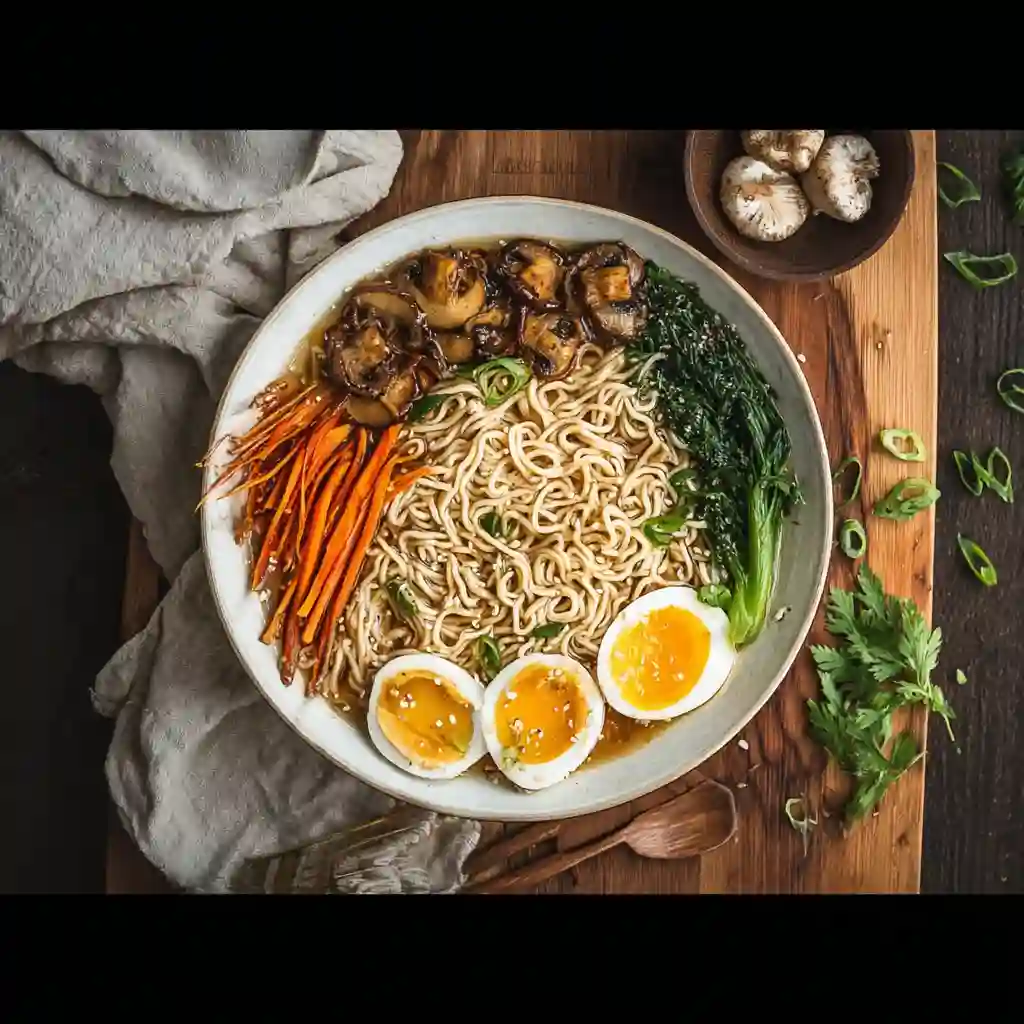
The Ultimate Gluten Free Noodle Showdown: Which Noodle is Best?
The noodle is the heart of any ramen bowl. Texture, chewiness, and how it holds up in broth all make a big difference. When going gluten-free, not all noodles are created equal. Here are the top contenders to consider for your perfect bowl.
Brown Rice and Millet Noodles
These noodles come closest to the traditional ramen experience. They have a firm bite and hold their shape well in hot broth. Brands like Lotus Foods, Real Naturals, and King Soba make great versions.
Buckwheat Noodles (100% Soba)
Buckwheat has a bold, earthy flavor and firmer texture. Make sure to read labels carefully, as some soba noodles are blended with wheat. Only pure buckwheat is gluten-free.
Shirataki Noodles
Made from the konjac root, these are a grain-free and low-carb option. They’re slippery with a gelatinous feel, perfect for keto-friendly ramen or very light soups.
Comparison Table
| Noodle Type | Key Ingredients | Texture Profile | Best For |
| Brown Rice and Millet | Brown Rice Flour, Millet Flour | Chewy, holds up in broth | A classic ramen experience |
| Buckwheat (100%) | Buckwheat Flour | Firmer, nutty | Miso or soy-based broths |
| Shirataki | Konjac Yam | Slippery, gelatinous | Low-carb or keto ramen bowls |
Pro Tip: Always cook gluten-free noodles in a separate pot. After boiling, rinse them with cold water to stop the cooking process. This keeps them from getting mushy when added to hot broth. Most people skip this and end up with soggy noodles. Don’t be that person.
The 4 Pillars of Gluten-Free Broth (Recipes Included)
A good broth is the backbone of ramen. It brings depth, warmth, and balance to the bowl. Here are four gluten-free broths to match any mood or craving. Each one is easy to make and full of bold flavor.
Broth #1: Classic Shoyu (Soy Sauce) Broth
This savory broth is a staple in traditional ramen.
Ingredients
- 2 cups gluten-free chicken or vegetable broth
- 1 tablespoon tamari (gluten-free soy sauce)
- 2 cloves garlic, minced
- 1 teaspoon grated fresh ginger
Instructions
In a saucepan, combine broth, tamari, garlic, and ginger. Bring to a boil, then reduce heat and let simmer for 5 to 7 minutes. This creates a rich base with salty, umami notes.
Broth #2: Rich and Creamy Miso Broth
This version is perfect when you want something comforting and full-bodied.
Ingredients
- 2 cups vegetable broth
- 1 tablespoon white or yellow miso paste
- 1 teaspoon grated ginger
- 1 clove garlic, minced
- 1 cup unsweetened almond or soy milk
Instructions
In a pot, heat the broth with garlic and ginger. Simmer for 5 minutes. Remove from heat. In a small bowl, whisk the miso with a bit of hot broth until smooth, then stir it back into the pot. Finish by adding the plant-based milk for a silky finish.
Tip: Always stir in miso at the end. Boiling miso can dull its flavor and kill the probiotics.
Broth #3: Quick and Spicy Broth
Need a kick? This one brings the heat.
Ingredients
- 2 cups broth of choice
- 1 teaspoon chili oil
- 1 teaspoon sriracha or chili crunch
- Optional pinch of red pepper flakes
Instructions
Bring the broth to a simmer, stir in the chili elements, and cook for 3 to 4 minutes. Adjust the spice level to your liking. It’s bold, fast, and wakes up every bite.
Broth #4: Simple Vegan Broth
For a clean, plant-based option with tons of depth.
Ingredients
- 2 cups vegetable broth
- 3 to 4 dried shiitake mushrooms
- 1 tablespoon tamari
- 1 small piece of kombu (optional, for added umami)
Instructions
Simmer all ingredients together for 10 minutes. Remove mushrooms and kombu before serving. This broth is light yet savory, perfect for vegan ramen.
Watch and Learn: Check out the quick video above on how to build each broth. You’ll see just how easy it is to craft a ramen base that fits your flavor preferences.
Customizing Your Perfect Bowl: Toppings and Variations
Ramen is all about making it your own. Once the base is set, the toppings take it to the next level. Here are easy ways to personalize your bowl with proteins, vegetables, and flavor boosters.
Essential Protein Toppings
The Perfect Jammy Egg
Start with room temperature eggs. Bring a pot of water to a gentle boil. Lower in the eggs carefully and cook for 7 to 8 minutes. Immediately transfer them to an ice water bath to stop cooking. Peel and slice in half for a creamy, golden center.
Other Protein Options
Try thinly sliced steak, shredded chicken, sautéed shrimp, crispy pork belly, or seared tofu. These can be cooked ahead of time or added freshly prepared.
Vegetable and Garnish Toppings
Leafy Greens
Add baby spinach, bok choy, or kale for a soft bite and color.
Mushrooms
Shiitake and cremini mushrooms bring deep umami flavor.
Crunch and Freshness
Use julienned carrots, bean sprouts, or fresh green onion slices to add a fresh snap.
Flavor Boosters
Top with toasted sesame seeds, nori strips, a drizzle of chili oil, or a squeeze of lime to brighten everything up.
Mix and match to create your signature bowl. Keep it light or load it up. There’s no wrong way to top your ramen when it starts with a solid gluten-free base.
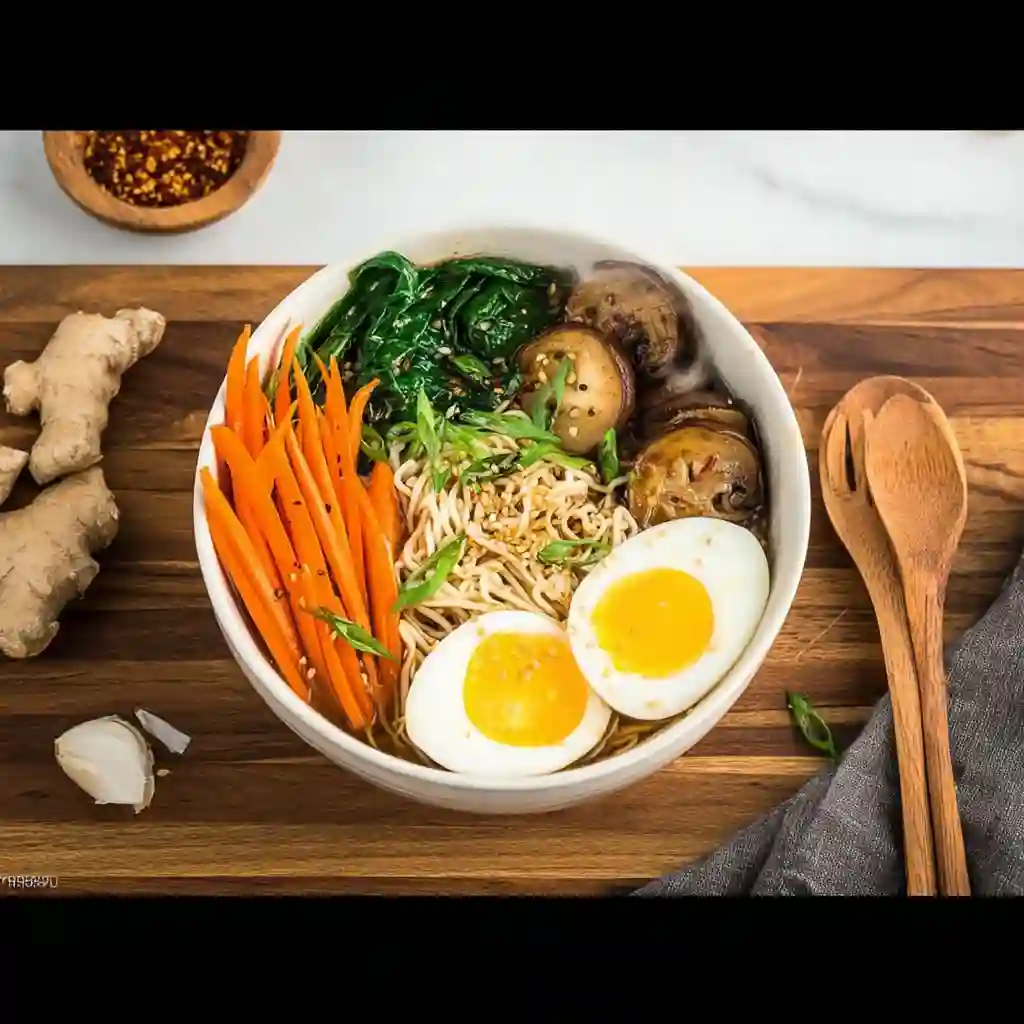
Serving and Storage Tips
Knowing how to serve and store gluten-free ramen properly keeps it fresh and delicious every time.
How to Serve Leftover Ramen
For best results, keep the broth, noodles, and toppings in separate containers. This prevents soggy noodles and limp vegetables. When ready to eat, reheat the broth and toppings gently on the stove, then add the noodles just before serving. This keeps the texture right and the flavor intact.
How to Store Leftovers
Store the broth and toppings in airtight containers in the refrigerator for up to four days. Noodles are best eaten within two days to avoid becoming overly soft.
Can You Freeze Ramen?
Avoid freezing the full ramen bowl. Gluten-free noodles do not hold up well after thawing. However, the broth freezes perfectly. Pour it into freezer-safe containers and store for up to one month. When ready to use, just thaw, reheat, and add freshly cooked noodles and toppings.
More Gluten Free Recipes To Try!
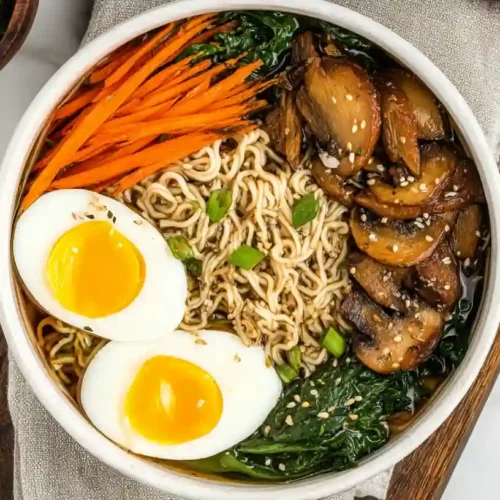
Gluten Free Ramen recipe

Ingredients
Noodles
- 2 cakes gluten-free ramen noodles
Vegetables
- 1 large carrot peeled and cut into thin strips
- 1 cup cremini or button mushrooms sliced
- 1 cup baby spinach leaves packed
Flavor Base
- 1 tablespoon extra virgin olive oil
- 2 teaspoons garlic minced
- 0.5 teaspoon fresh ginger grated
Broth
- 2 cups low-sodium chicken broth
- 1 tablespoon gluten-free soy sauce tamari recommended
- 0.5 teaspoon onion powder
- 0.5 teaspoon salt
- 0.25 teaspoon ground black pepper
Toppings
- 2 soft-boiled eggs peeled and sliced in half
- 2 tablespoons green onions sliced
- 0.25 teaspoon crushed red pepper flakes optional for heat
Instructions
- Boil the noodles: Fill a medium pot with water and bring it to a full boil. Add the gluten free ramen noodles and cook according to package instructions, usually around 3 minutes until tender.
- Rinse and set aside: Drain the noodles and immediately rinse them under cold water to stop the cooking process. Set the noodles aside.
- Sauté the vegetables: In a large skillet, heat olive oil over medium heat. Add the carrots, mushrooms, spinach, garlic, and ginger. Cook for 4 to 6 minutes until vegetables soften and spinach wilts.
- Set the veggies aside: Transfer the vegetables to a plate and keep warm.
- Make the broth: In the same skillet, pour in chicken broth. Add tamari, onion powder, salt, and black pepper. Bring to a boil, then reduce heat and simmer for 5 minutes.
- Assemble the bowls: Divide the cooked noodles between two bowls. Pour hot broth over them.
- Add toppings: Add sautéed vegetables, halved soft-boiled eggs, green onions, and crushed red pepper flakes if using.
Notes
Nutrition Facts (Per Serving)
- Calories: 521 kcal
- Carbohydrates: 56 g
- Protein: 21 g
- Fat: 25 g
- Saturated Fat: 8 g
- Polyunsaturated Fat: 3 g
- Monounsaturated Fat: 12 g
- Cholesterol: 187 mg
- Sodium: 2683 mg
- Potassium: 797 mg
- Fiber: 4 g
- Sugar: 4 g
- Vitamin A: 6906 IU
- Vitamin C: 8 mg
- Calcium: 102 mg
- Iron: 5 mg
Conclusion
Great gluten-free ramen starts with the right noodle, builds on a bold broth, and finishes with fresh toppings. This recipe delivers comfort in a bowl without relying on wheat. Whether you go classic with a soy-based broth or switch it up with creamy miso or spicy heat, you can make it your own.
If you make this recipe, I’d love to see it. Leave a comment below with your favorite topping combos or tag me on social media to share your version.
What toppings do you love most in your ramen? Let me know below. Your ideas might inspire someone else’s perfect bowl.
Frequently Asked Questions (FAQ)
Can ramen be made gluten-free?
Yes, absolutely. Traditional ramen contains wheat-based noodles and soy sauce, but you can make a gluten-free version using tamari and gluten-free noodles like brown rice, millet, or buckwheat. With a few simple swaps, the dish stays just as flavorful and satisfying.
Can celiac people eat ramen?
People with celiac disease can enjoy ramen as long as every ingredient is gluten-free. This means using certified gluten-free noodles, tamari instead of regular soy sauce, and checking broth ingredients for hidden gluten. Making it at home is the safest way to control what goes in the bowl.
Are ramen seasoning packets gluten-free?
Most seasoning packets from instant ramen contain wheat or soy sauce made with wheat. These are not gluten-free and can be risky for those with sensitivities. For a safe option, skip the packet and make your own broth using gluten-free ingredients.
Does Maruchan ramen have gluten-free?
Maruchan products are made with wheat flour and are not gluten-free. They do not offer a certified gluten-free option at this time. If you need a gluten-free alternative, look for brands like Lotus Foods or King Soba.
Does soy sauce have gluten?
Most soy sauces contain wheat, which means they are not gluten-free. Tamari is a great alternative and has a similar flavor profile. Always read the label to make sure it’s certified gluten-free.
What is a gluten-free alternative to ramen noodles?
Good gluten-free noodle options include those made from brown rice, millet, or 100 percent buckwheat. Popular brands include Lotus Foods, Real Naturals, and King Soba. Shirataki noodles made from konjac root are also gluten-free and low in carbs.
Is ramen broth gluten-free?
Not always. Many broths include soy sauce or other ingredients that contain gluten. To be sure, make your own broth using tamari and gluten-free stock. That way, you control everything in the bowl.
What are some good gluten-free ramen toppings?
Great toppings include soft-boiled eggs, sliced green onions, shiitake mushrooms, bok choy, shredded chicken, steak, or tofu. Add extras like sesame seeds, nori strips, or chili oil for a flavor boost. The possibilities are endless and easy to customize.