
I recall my first encounter with the concept of combining steak and pasta in a single skillet; it wasn’t in a high-end bistro, but rather in the bustling kitchen of my Aunt Maria.
She was a woman who believed that “simple” didn’t mean “compromised.” She would sear beef with a precision that bordered on art, the crackle of the meat hitting the hot pan serving as a dinner bell for the entire neighborhood.

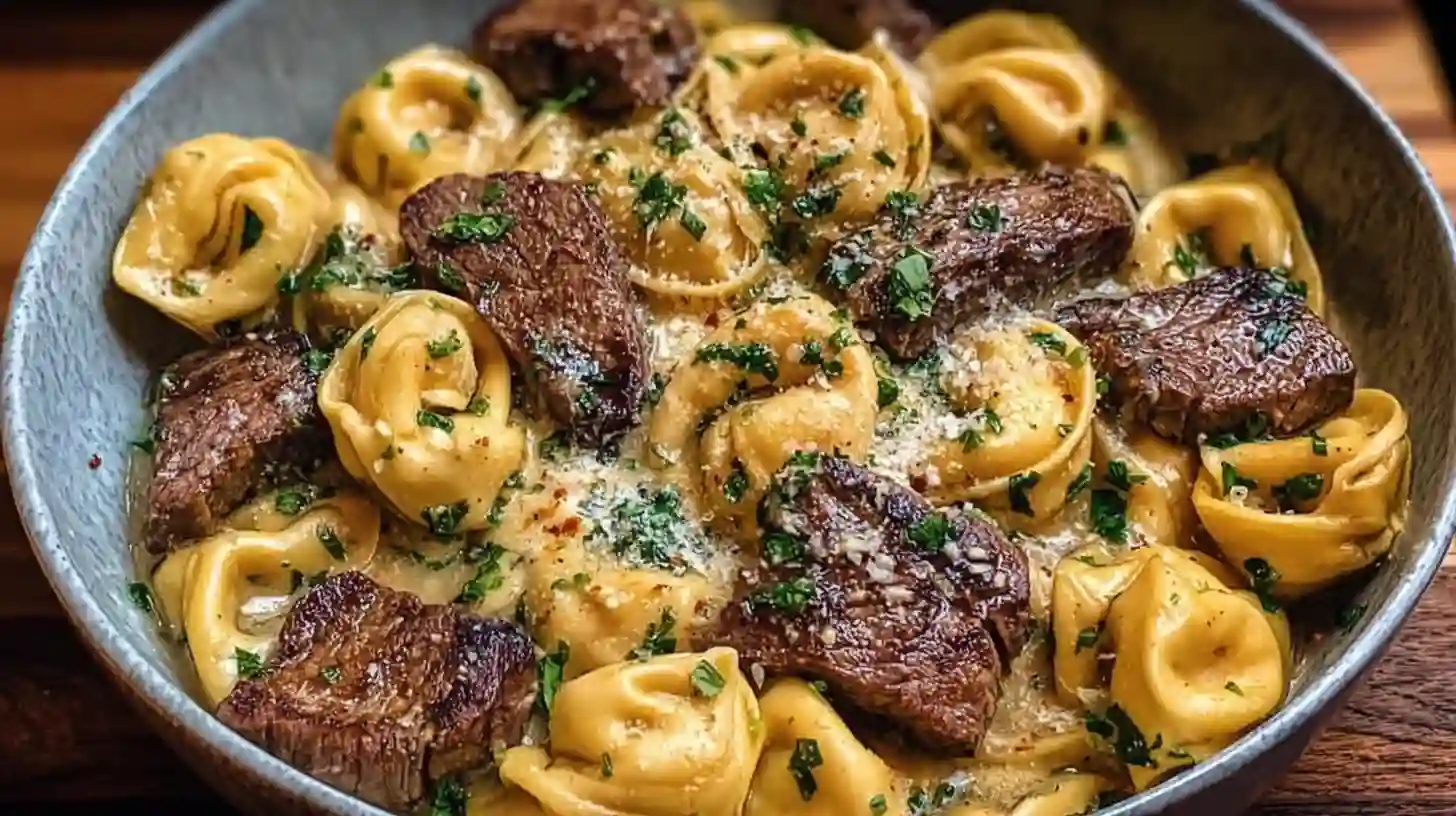
Garlic Steak Tortellini

Equipment
- Large skillet or cast iron pan (12-inch)
- Large Pot
- Sharp knife
- Tongs or Spatula
- Measuring cups
- Paper towels
Ingredients
Main Ingredients
- 1.5 lb sirloin steak cut into 1-inch pieces
- 2 Tbsp olive oil
- 1 tsp salt
- 1/2 tsp black pepper
- 1 tsp Italian seasoning
- 20 oz cheese tortellini fresh or frozen
- 1 Tbsp salt for pasta water
Garlic Butter Sauce
- 4 Tbsp butter
- 6 cloves garlic minced
- 1.5 cups heavy cream
- 1 cup Parmesan cheese freshly grated
- 1/2 tsp salt to taste
- 1/4 tsp black pepper to taste
- 1 tsp Italian seasoning
- 1/2 cup reserved pasta water as needed
Garnish
- 1/4 cup fresh parsley chopped
- 1/4 cup extra Parmesan cheese for topping
Instructions
- Cut sirloin steak into bite-sized pieces (about 1 inch thick). Pat dry with paper towels and season with salt, pepper, and Italian seasoning. Let rest for 10 minutes.
- Heat a large skillet over high heat until smoking. Add olive oil and sear steak pieces for 2 minutes per side until browned. Remove and set aside.
- Meanwhile, boil salted water in a large pot. Add tortellini and cook according to package directions (2–4 minutes). Reserve 1 cup of pasta water, then drain but do not rinse.
- In the same skillet used for steak, reduce heat to medium and melt butter. Add minced garlic and sauté for 30 seconds until fragrant.
- Pour in heavy cream, bring to a gentle simmer, then add grated Parmesan, stirring until melted and smooth. Season with salt, pepper, and Italian seasoning.
- Add cooked tortellini into the garlic cream sauce. Toss gently to coat evenly, then add steak bites back into the skillet. Stir everything together for 1–2 minutes to combine.
- Adjust sauce consistency with reserved pasta water as needed for a glossy finish. Garnish with chopped parsley and extra Parmesan before serving.
Notes
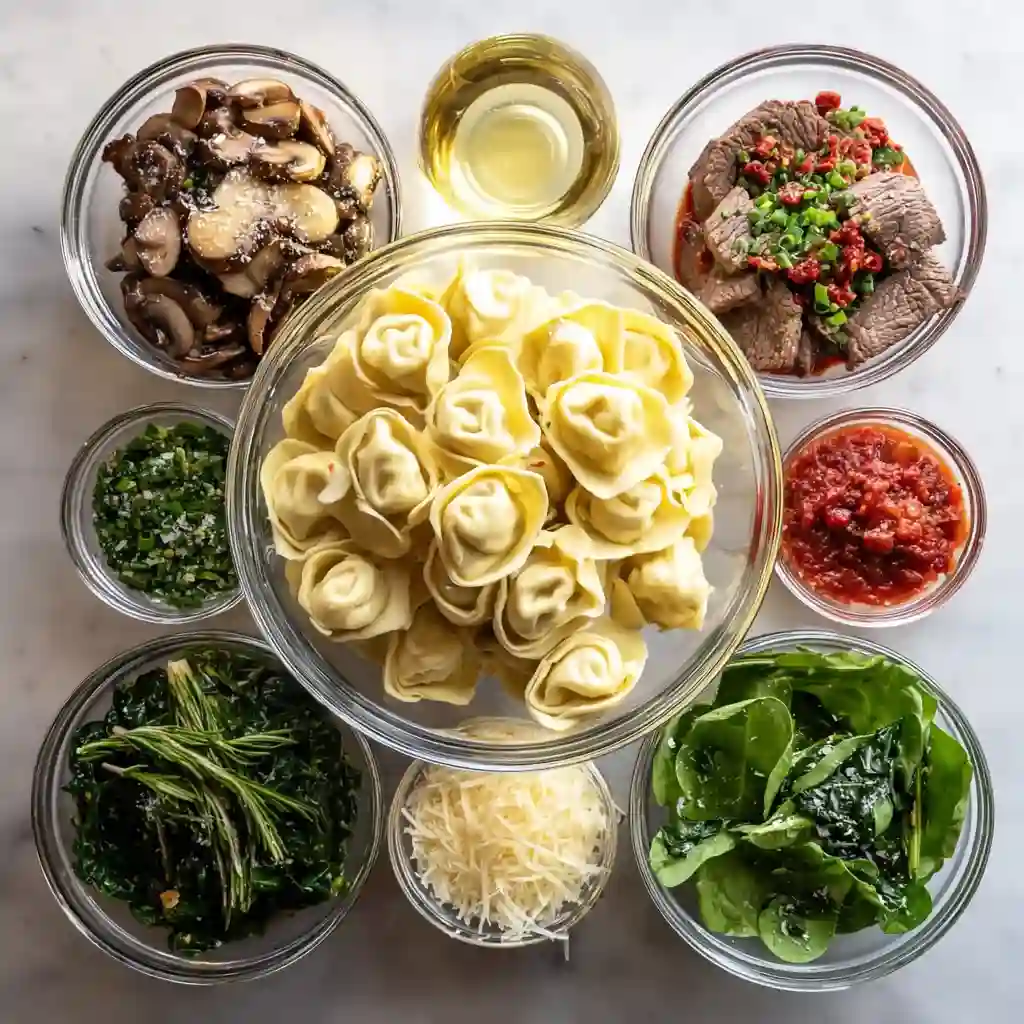
Table of Contents
Watching her toss pillowy tortellini into that same pan, letting them bathe in the residual garlic butter and steak juices, changed my perspective on weeknight cooking forever. This isn’t just about feeding a family; it’s about creating a moment of luxury amidst the chaos of a Tuesday evening.
The appeal of Garlic Steak Tortellini lies in its unashamed richness. It marries the robust, iron-rich flavor of seared beef with the delicate, cheesy embrace of fresh pasta.
Why does this recipe work so well? It leverages the “one-pan” method or effectively, a two-pan method if you boil pasta separately to build layers of flavor that a disjointed meal simply cannot achieve.
By cooking the sauce in the same vessel used for the meat, we capture the “fond,” those caramelized bits of protein that are the soul of flavor.
The result is a savory “umami” bomb where garlic, parmesan, and beef unite. This dish is designed for everyone: busy parents needing 30 minute dinner ideas, couples seeking a romantic date night without the cleanup, and meal preppers who refuse to settle for bland chicken and rice.

Choosing the Best Steak for Tortellini
Selecting the right protein is the difference between a melt-in-your-mouth experience and a jaw workout. When I browse the butcher counter, I often find myself debating between Top Sirloin and Ribeye.
In my experience, Top Sirloin is the “Goldilocks” choice for steak bites. It offers a commendable balance of tenderness and affordability, making it practical for a family meal without sacrificing texture.
Ribeye, while undeniably superior in marbling and flavor, can be cost-prohibitive for a casual pasta dish. However, if you are looking to impress, the fat content in a Ribeye renders down to make the creamy garlic parmesan sauce even more decadent.
For those watching their budget, there are viable alternatives. Flank Steak or Skirt Steak can be exceptional if and this is a massive “if” you treat them with respect.
These cuts must be sliced thinly against the grain to sever the muscle fibers; otherwise, they remain tough. A New York Strip is another sturdy option that holds up well to high-heat searing.
Conversely, there are cuts you must strictly avoid. Please, do not succumb to the temptation of “Stew Meat” or “Chuck Roast.”
These cuts are rich in collagen, which requires hours of low-and-slow braising to break down. In a quick beef tortellini skillet, they will simply seize up and become rubbery, ruining the texture of your creamy steak pasta.
A crucial prep tip I learned the hard way involves uniformity. You must cut your steak into uniform bite-sized pieces.
If your cubes vary in size, the small ones will overcook into leather before the large ones are safe to eat. Aim for 1-inch cubes for the perfect sear-to-center ratio.
Essential Ingredients & Substitutions
The backbone of this dish is, naturally, the pasta. I have experimented with every type available, and the verdict is clear: refrigerated fresh cheese tortellini is the superior choice.
Fresh pasta cooks in barely two minutes and maintains a tender, “al dente” bite that dries pasta struggles to replicate. It acts as a sponge, absorbing the sauce without becoming mushy.
Using frozen tortellini is a close second and offers incredible convenience. There is no need to thaw; they can go straight into the boiling water, making them perfect for impromptu yummy dinners.
I tend to avoid dried, shelf-stable tortellini found in the pasta aisle. They often have a thicker, gummier dough and a filling that tastes distinctly preserved.
Now, let’s discuss the liquid gold: the sauce. The “Dairy Trinity” for a proper garlic butter steak and tortellini consists of heavy cream, unsalted butter, and fresh parmesan cheese.
I implore you to grate your own cheese. The pre-shredded varieties in bags are coated with cellulose to prevent clumping, which is the enemy of a smooth emulsion.
For aromatics, fresh minced garlic is non-negotiable. Garlic powder has its place, but not here. We want the pungent, spicy bite that only fresh cloves can provide.
If you are pressed for time, there is a popular “hack” involving the “Buffalo Wild Wings Parmesan Garlic Sauce.” While not traditional, stirring this bottled sauce into some cream can mimic the flavor profile of a garlic parmesan sauce hack for ultra-lazy nights.
To balance the richness, I always recommend vegetable add-ins. A handful of fresh spinach, tossed in at the very end, wilts instantly and adds a pop of color and nutrition.
Sun-dried tomatoes offer a tart contrast to the heavy cream, while asparagus pieces, sautéed with the steak, bring a lovely crunch to your pasta dinner recipes.
Step-by-Step Instructions: The One-Pan Method
The methodology here is just as important as the ingredients. We begin with the “Hard Sear.”
Step 1: The Hard Sear
To achieve how to cook steak bites tender, you need high heat. Place your skillet over a high flame and add a high-smoke-point oil.
Pat your steak cubes completely dry with paper towels; moisture creates steam, and steam prevents browning. Season generously.
Add the steak to the pan, but do not crowd it. If the pieces touch, they steam. Sear for 1-2 minutes per side until a deep brown crust forms, then remove them immediately. They should still be rare in the middle; they will finish cooking later.
Step 2: Deglazing the Pan
Once the meat is removed, you will see brown residue on the pan bottom. This is not dirt; it is flavor.
Pour in a splash of white wine or chicken broth to deglaze. Use a wooden spoon to scrape up this “fond.” This step infuses the sauce with a meaty depth that makes this steak tortellini recipe sing.
Step 3: Building the Cream Sauce
Lower the heat to medium. Add your butter and fresh garlic, sautéing just until fragrant about 30 seconds. Do not burn the garlic, or it will turn bitter.
Pour in the heavy cream and let it simmer gently. Then, reduce the heat to low and whisk in the parmesan. This “low and slow” addition is critical to prevent the cheese from seizing.
Step 4: Combining
Now, the magic happens. Add your cooked, drained tortellini directly into the bubbling sauce. Toss them gently to coat.
Then, return the seared steak (and any resting juices on the plate) to the pan. Fold everything together. This is the definition of steak and pasta dinner perfection.
Step 5: The “Rest”
Finally, remove the pan from the heat. Let the dish sit for 2 minutes.
Just like a steak needs to rest, a cream sauce needs a moment to cool slightly and thicken, clinging to the pasta rather than pooling at the bottom.
Troubleshooting & Pro-Tips for Creamy Sauce
Even seasoned cooks can struggle with cream sauces. A “broken” sauce, where the oil separates from the milk solids, is a common tragedy.
This usually happens because the heat was too high. Dairy is delicate. If your sauce looks greasy, don’t panic.
Remove it from the heat immediately. Add a splash of cold heavy cream or water and whisk vigorously. This can often re-emulsify the mixture.
This brings me to the “Pasta Water” secret. Whenever you boil pasta, reserve half a cup of the starchy water before draining.
This cloudy water is rich in starch, which acts as a binder. If your creamy garlic parmesan sauce is too thick or gluey, a splash of this water will loosen it while helping it adhere to the noodles.
It is the secret weapon of every Italian chef.
Regarding the meat, temperature control is vital. The biggest mistake people make is overcooking the steak bites.
Remember, the steak cooks twice: once during the sear and again when warmed in the sauce. If you cook them to “well done” during the sear, they will be rubber bullets by dinnertime.
Pull them off the heat when they are rare to medium-rare. This ensures your steak bites remain tender.
Variations of Garlic Steak Tortellini
One of the reasons I adore this recipe is its versatility. It is a canvas for your culinary creativity.
For a “Philly Cheesesteak Style” twist, sauté sliced bell peppers and onions in the beef fat before making the sauce. Swap the parmesan for Provolone or Mozzarella to mimic that classic sandwich flavor.
This variation transforms the dish into a cheeseburger tortellini cousin that is incredibly satisfying.
If you enjoy heat, try the “Spicy Cajun Version.” Add a tablespoon of Cajun seasoning to the steak rub and a generous pinch of red pepper flakes to the cream sauce.
The heat cuts through the dairy fat beautifully.
For a touch of elegance, go for “Surf and Turf.” Add raw, peeled shrimp to the sauce during the last 3 minutes of simmering. They cook quickly and add a sweetness that pairs wonderfully with the savory beef.
Alternatively, a “Pesto Twist” can brighten the entire meal. Stir in a spoonful of basil pesto right at the end, off the heat.
This adds a herbaceous freshness that makes the dish feel lighter and more like a summer steak and tortellini recipes staple.
Serving Suggestions and Sides
While this one pan steak and tortellini is a complete meal, the right sides elevate it from “dinner” to “dining.”
Bread is mandatory. You need a vehicle to mop up that luxurious sauce.
A loaf of crusty garlic bread or fluffy focaccia is ideal.
To balance the richness, you need acid and crunch. A crisp Caesar salad is classic, but an Arugula salad with a sharp lemon vinaigrette is even better.
The peppery bite of the arugula contrasts with the creamy pasta.
For wine drinkers, pairing is key. A bold Cabernet Sauvignon stands up to the steak, while a buttery Chardonnay complements the cream sauce.
Personally, I think a Pinot Noir bridges the gap perfectly, offering enough fruit to handle the saltiness of the steak and mushroom pasta elements if you choose to add fungi.
More easy Recipes To Try!
Strawberry Crunch Cheesecake Tacos
FAQ (Based on People Also Ask)
What kind of steak is best for pasta?
Top Sirloin is generally the best steak for pasta. It is tender enough to chew easily but robust enough to hold its own against a rich sauce.
Ribeye is delicious but expensive, while filet mignon is too lean and delicate for a rustic skillet dish.
Can I use frozen tortellini without boiling first?
Generally, no. While some one-pot recipes suggest simmering pasta directly in the sauce, tortellini needs a lot of liquid to hydrate properly.
If you cook them in the cream sauce, they will absorb all the liquid, leaving you with dry pasta and no sauce. It is best to boil them separately for the best texture.
How do I reheat leftovers without the sauce separating?
Cream sauces are notoriously difficult to reheat. The microwave often causes the butter to separate. The best method is “low and slow” on the stove.
Place the leftovers in a pan over low heat and add a splash of milk or water. Stir gently until warmed through. This helps re-incorporate the fats for a leftover steak pasta recipe that tastes fresh.
Is this recipe spicy?
No, the base recipe is savory and creamy, not spicy. However, adding red pepper flakes or Cajun seasoning is a popular way to customize it. It is entirely up to your palate.