
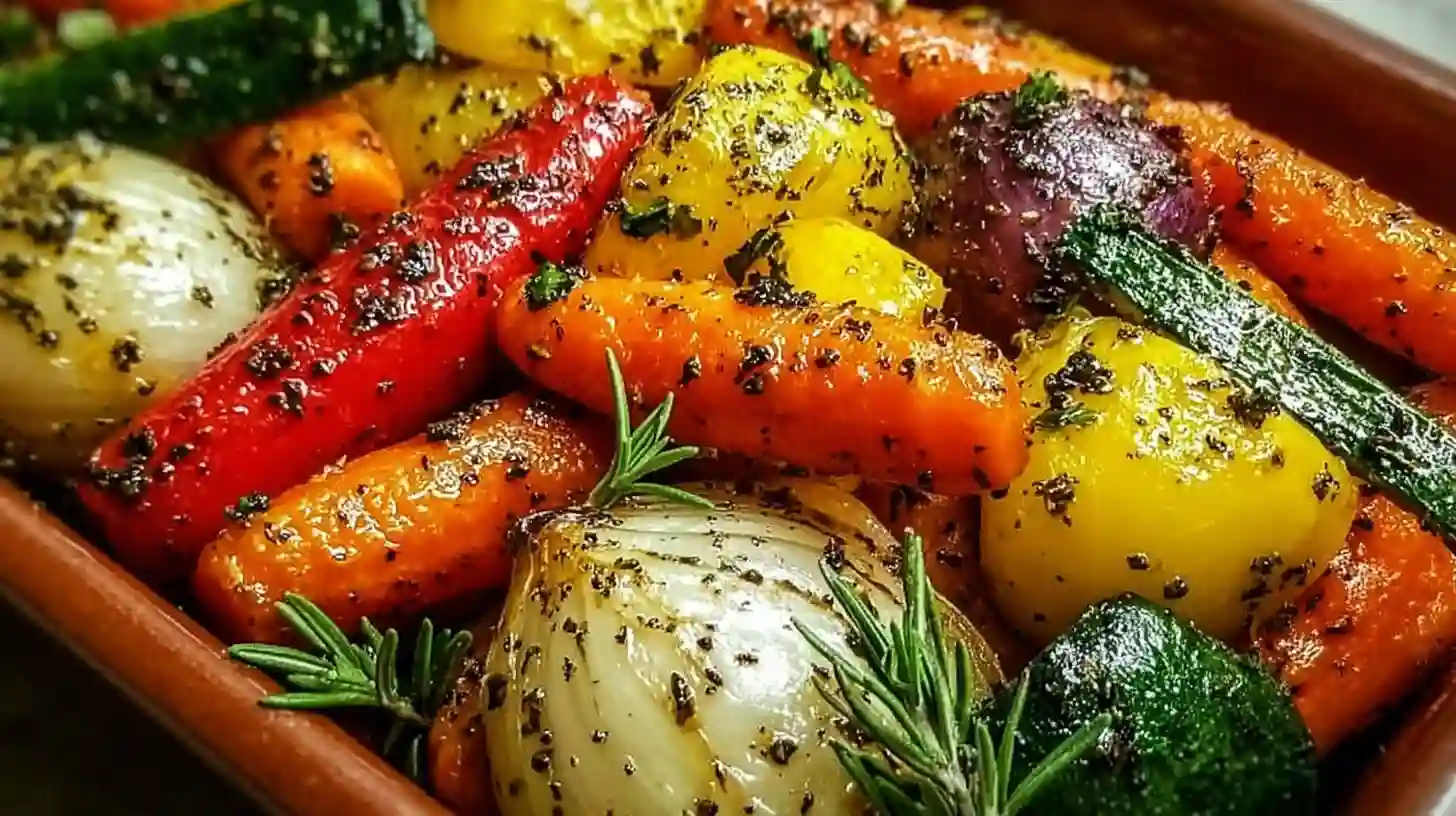
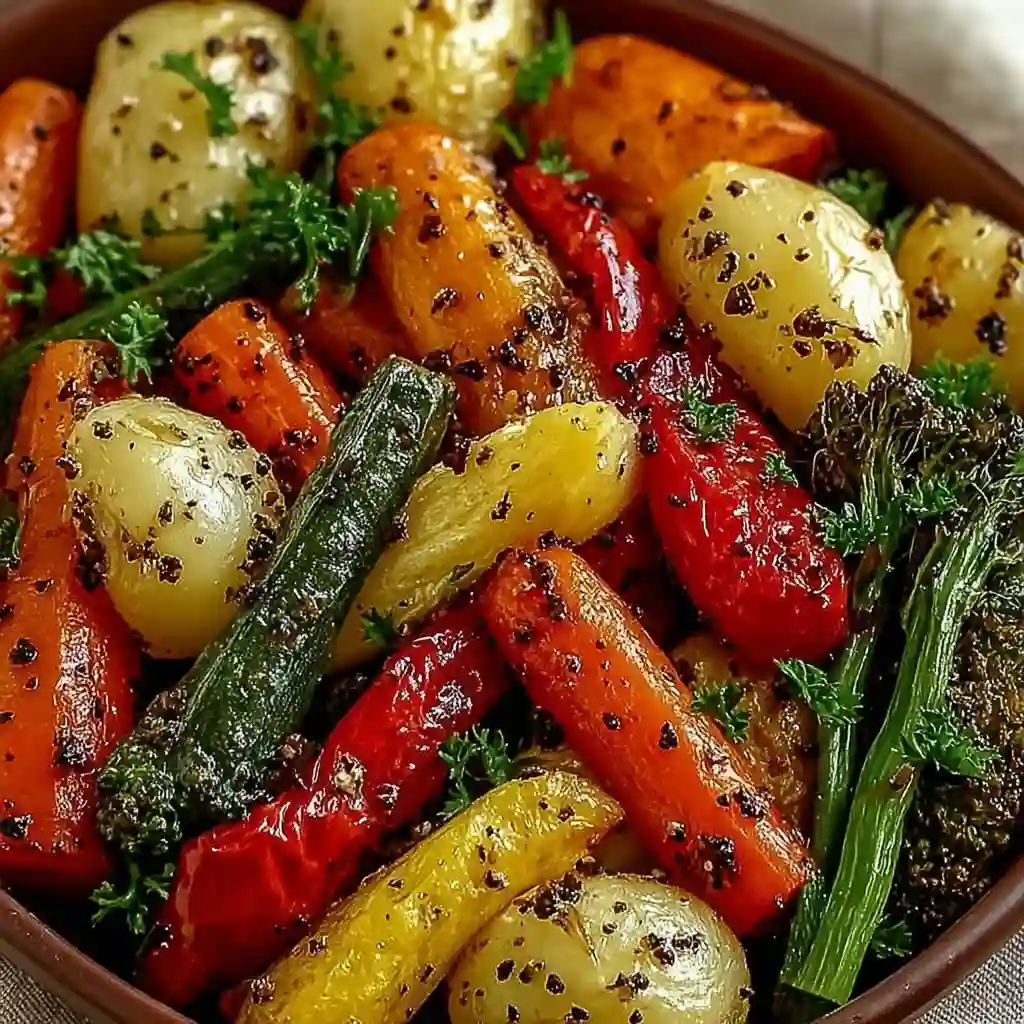
Garlic Herb Roasted Veggies are the quintessential side dish that seamlessly blends nutrition, ease, and profound flavor, elevating any dining experience from the mundane to the memorable.
This comprehensive guide explores the culinary science behind roasting, detailing how heat transforms simple produce into caramelized masterpieces while retaining essential nutrients.
Ideal for busy weeknights or elaborate holiday spreads, this method offers a versatile, “set it and forget it” solution that suits almost every dietary need, including Vegan, Paleo, and Gluten-Free lifestyles. Below, we unlock the secrets to achieving the perfect crisp-tender texture and creating a harmonious herb profile that will make vegetables the star of your plate.
Garlic Herb Roasted Veggies

Equipment
- Baking Sheet
- Mixing bowl
Ingredients
- 1 lb baby potatoes halved (red or gold)
- 1 cup baby carrots or sliced regular carrots
- 1 cup fresh green beans trimmed
- 2 tbsp olive oil
- 3 cloves garlic minced
- 1 tsp dried Italian seasoning
- 1/2 tsp smoked paprika
- 1/2 tsp salt
- 1/2 tsp black pepper
- 1/4 tsp red pepper flakes optional, for a little heat
- 1 tbsp fresh parsley chopped (for garnish)
Instructions
- Preheat your oven to 400°F (200°C). Line a baking sheet with parchment paper or lightly grease it.
- In a large bowl, toss the halved baby potatoes and carrots with 1 tablespoon of olive oil, minced garlic, Italian seasoning, smoked paprika, salt, and black pepper until evenly coated.
- Spread the seasoned potatoes and carrots in an even layer on the prepared baking sheet and roast for about 25 minutes, flipping halfway through for even cooking.
- In the same bowl, toss the green beans with the remaining tablespoon of olive oil and a pinch of salt. After the first 25 minutes, add the green beans to the baking sheet and return to roast for another 10–15 minutes until the vegetables are tender and slightly crisp.
- Once done, sprinkle fresh parsley and optional red pepper flakes over the roasted vegetables before serving.
Notes
Table of Contents
I vividly recall the first time I truly understood the power of a simple roasted vegetable. It wasn’t in a high-end restaurant, but in the cozy, sunlit kitchen of my French neighbor, Madame Claire. I was twenty years old, and up until that point, vegetables were something I boiled into submission. Claire, observing my culinary hesitation, tossed a tray of garlic herb roasted veggies and potatoes into her oven with a nonchalant flick of her wrist.
“The oven does the work, mon chéri,” she told me, the scent of rosemary beginning to fill the air. That afternoon, I realized that heat and herbs could transform humble ingredients into something spectacular. It is a lesson I have carried with me ever since, and today, I am sharing that wisdom with you.
Why This Is the Best Side Dish for Any Meal
The universal appeal of roasted vegetables lies in the chemical magic known as the Maillard reaction. When we prepare Garlic Herb Roasted Veggies, the high heat causes the natural sugars in the vegetables to caramelize, creating a depth of flavor that steaming or boiling simply cannot achieve.
This method transforms the sharp bite of a raw onion into a sweet, jammy delight and turns a starchy potato into a crispy, savory gem. It is a culinary metamorphosis that appeals to even the pickiest eaters. Furthermore, the convenience factor is undeniable.
This is essentially a sheet pan dinner component; once you have prepped your ingredients, the oven takes over, leaving you free to focus on other tasks. Whether you are meal prepping for a busy week or looking for dinners with more veggies, this approach is the gold standard for efficiency.
The Health Benefits of Roasting vs. Boiling
From a nutritional standpoint, roasting is superior to boiling in many ways. Boiling vegetables can cause water-soluble vitamins, such as Vitamin C and B vitamins, to leach out into the cooking water, which is often discarded.
However, when you make a garlic roasted vegetables recipe, you are cooking with dry heat, which helps retain these vital nutrients. Additionally, the fat used in roasting typically a healthy oil like olive oil aids in the absorption of fat-soluble vitamins like A, K, and E. It is fascinating to consider how a dish so rich in flavor also supports our well-being.
This method is naturally compliant with various dietary protocols, making it a safe and delicious option for almost anyone at your table. Whether you are looking for easy healthy side dishes for dinner or specifically seeking iron rich side dishes, roasting preserves the integrity of the food.
Choosing the Best Vegetables for Roasting
Root Vegetables: The Foundation of Flavor
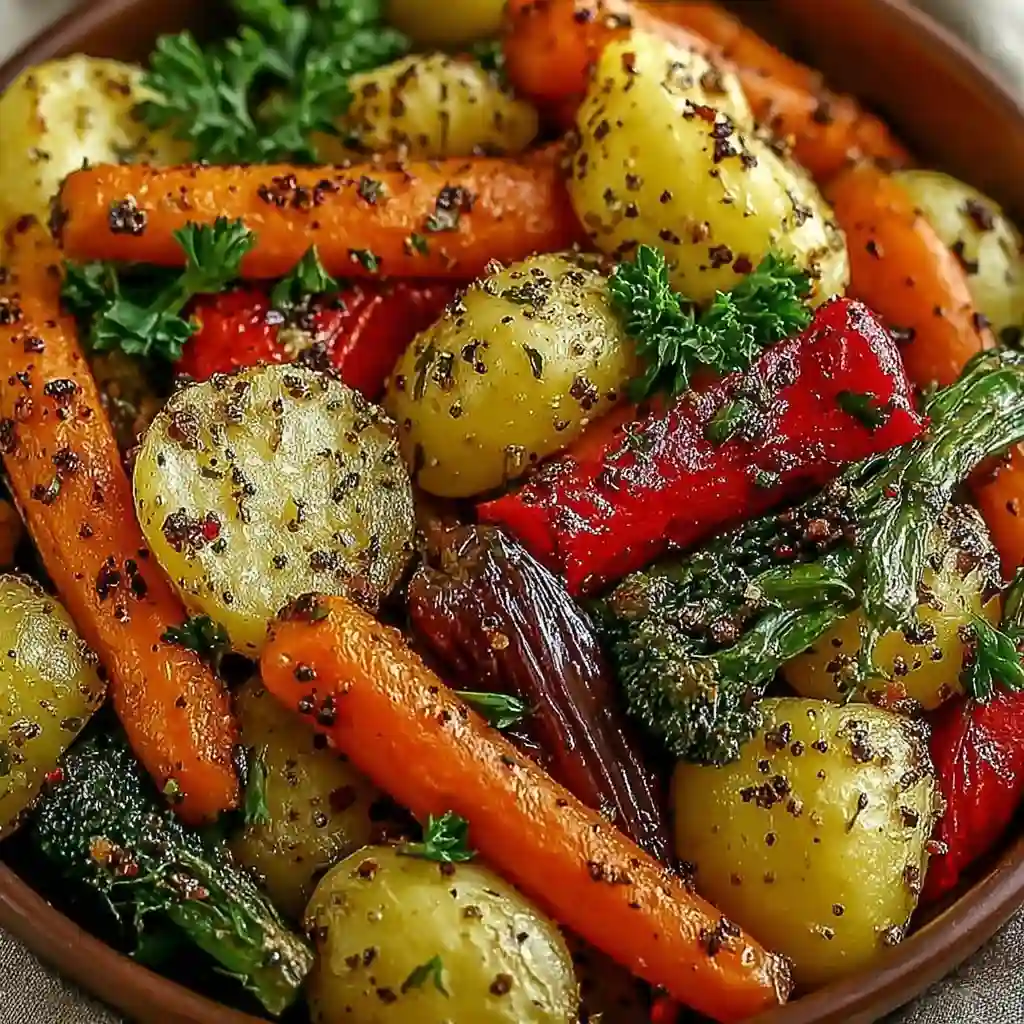
When building the perfect tray, I always start with the foundation: root vegetables. They are dense, hold up well to high heat, and offer the most satisfying texture. Garlic Herb Roasted Potatoes And Carrots are the classic duo that anchors this dish.
I prefer using baby potatoes either Yukon Gold for their creamy interior or Red potatoes for their ability to hold shape because they require less chopping. When preparing garlic herb roasted veggies and potatoes, it is crucial to cut your root vegetables into uniform sizes.
If you leave a carrot chunk too large next to a small dice of potato, you will end up with one being undercooked while the other is burnt. Parsnips and beets are also excellent additions, providing earthy sweetness. I have found that creating a root vegetable medley not only looks beautiful but ensures a complex flavor profile where each bite offers something slightly different.
Cruciferous and Softer Vegetables
While root vegetables provide the substance, softer and cruciferous vegetables add texture and vibrancy. I love incorporating broccoli, cauliflower, and Brussels sprouts. The florets of broccoli become irresistibly crispy in the oven, acting as a textural counterpoint to the soft, creamy potatoes.
Green beans are another favorite, though they require less cooking time. When I explore the world of recipes garlic herb roasted veggies, I often see people making the mistake of adding these softer vegetables at the same time as the dense roots. This usually leads to mushy broccoli. The trick is to add them halfway through roasting. This ensures that your garlic herb roasted veggies retain a bit of “bite” and color, rather than turning into an indistinguishable grey mash.
Seasonal Variations for Year-Round Cooking
One of the joys of this cooking method is its adaptability to the seasons. In the spring, I transition to lighter fare, roasting asparagus, radishes, and young carrots. These tender vegetables require a shorter roasting time but offer a fresh, grassy flavor that pairs beautifully with lemon.
Summer brings an abundance of zucchini, yellow squash, and bell peppers. When making mediterranean garlic herb roasted veggies, these summer squashes are essential.
Come fall and winter, I return to the comfort of butternut squash, sweet potatoes, onions, and pumpkin. These amazing vegetable recipes warm the kitchen and the soul.
Regardless of the season, the principle remains the same: choose fresh produce and respect its cooking time. Even frozen vegetables can be roasted if handled correctly, though fresh is always preferred for that optimal crunch.
Mastering the Seasoning: Garlic, Herbs, and Oil
Fresh vs. Dried Herbs: Creating the Perfect Blend
The debate between fresh and dried herbs is one I have had with many chefs. For roasting, I firmly believe that dried herbs often work better during the cooking process because they are less likely to burn at high temperatures.
A robust dried herbs for roasted vegetables blend—containing rosemary, thyme, oregano, and basil can withstand the 400°F heat needed for caramelization. However, fresh herbs have their place. I like to toss the vegetables in dried herbs before cooking and then shower them with fresh parsley or chopped fresh basil right after they come out of the oven.
This gives you the best of both worlds: deep, infused flavor and a bright, fresh finish. If you are following a specific garlic herb roasted veggies pioneer woman recipe, you might see a mix of both, which is a fantastic approach. Best herbs for roasted vegetables usually include woody herbs like rosemary and thyme, which are hearty enough to roast beautifully.
The Garlic Factor: Minced, Powdered, or Whole Cloves?
Garlic is the soul of this dish, but it can be tricky. If you mince fresh garlic and toss it in at the beginning, it will almost certainly burn and turn bitter before the potatoes are tender. To avoid this, I use a two-pronged approach.
I season the vegetables generously with garlic powder for that all-over savory coating this is a secret to many garlic roasted vegetables recipe successes. Then, I add whole, smashed cloves of garlic to the pan.
These roast slowly, becoming sweet and spreadable without burning. If you absolutely love the sharp taste of minced garlic, add it during the last 5 minutes of roasting. This technique ensures that your garlic herb roasted veggies recipe is aromatic and flavorful, avoiding that acrid burnt garlic taste that can ruin a meal.
Choosing the Right Oil with a High Smoke Point
The vehicle for all this flavor is oil, and choosing the right one is critical. Because we are roasting at high temperatures, we need an oil with a high smoke point. While I love the flavor of Extra Virgin Olive Oil, it can sometimes smoke at 400°F.
I prefer using standard “pure” olive oil or Avocado oil for the roasting process. Avocado oil is excellent for easy roasted vegetables because it is neutral and can handle very high heat. Once the vegetables are out of the oven, you can drizzle a high-quality Extra Virgin Olive Oil over them for flavor.
This layering of fats ensures your garlic herb roasted veggies crispy texture is achieved without setting off your smoke detector. Remember, the oil also helps conduct heat, ensuring those garlic herb roasted potatoes carrots and zucchini cook evenly.
Step-by-Step Instructions for Crispy Roasted Vegetables
Prep Work: Washing, Cutting, and Drying
The preparation phase is where the battle for crispiness is won or lost. After washing your produce, you must and I cannot stress this enough dry them completely. Water is the enemy of roasting. If your vegetables are wet, they will steam instead of roast, resulting in soggy, lackluster food.
I use a clean kitchen towel to pat everything down thoroughly. Next is cutting. As I mentioned regarding the garlic herb roasted veggies and potatoes, cutting vegetables into uniform 1-inch cubes ensures they finish cooking at the same time. Whether you are making weight watchers garlic herb roasted veggies or a decadent holiday side, this technical step is non-negotiable.
The Optimal Oven Temperature for Caramelization
Many home cooks set their ovens to 350°F out of habit, but for roasting, this is simply too low. The “sweet spot” for browning edges without burning is between 400°F and 425°F. At this temperature, the exterior of the vegetable dehydrates and crisps up quickly while the interior steams gently.
This contrast is what makes garlic herb roasted veggies in oven so delightful. If you have a convection setting, use it; the circulating air mimics an air fryer and is perfect for garlic herb roasted veggies recipe oven methods. Just be sure to reduce the temperature by about 25 degrees if using convection to prevent burning.
The Sheet Pan Strategy: Avoiding Overcrowding
The number one mistake I see when people attempt pan roasted vegetables is overcrowding the pan. When vegetables are piled on top of each other, they trap moisture. Instead of roasting, they steam in their own juices.
To achieve best oven roasted vegetables, you need to spread them out in a single layer with a little breathing room between each piece. I often use two baking sheets to ensure this spacing. Lining the pan with parchment paper helps with cleanup, but for maximum browning, roasting directly on the metal pan (lightly oiled) is actually superior. This technique is essential for sheet pan veggies that actually crunch.
Timing and Tossing
Total roast time generally falls between 30 and 45 minutes, depending on the size of your cuts. However, you cannot just walk away. Halfway through the cooking time, you need to toss the vegetables.
This ensures that all sides get exposure to the hot pan and brown evenly. It also gives you a chance to rotate the pans if your oven has hot spots. When I check on my baked vegetables roasted veggies, I look for golden-brown edges and tender centers. If you are adding softer veggies like green beans, this halfway mark is the time to add them. This attention to timing is what differentiates amazing vegetable recipes from average ones.
Serving Suggestions and Pairings
What to Serve with Garlic Herb Roasted Veggies
One of the reasons Garlic Herb Roasted Veggies are a staple in my home is their versatility. They pair beautifully with almost any protein. A simple roasted chicken or a pan-seared salmon fillet is elevated by the presence of italian roasted vegetables.
For a vegetarian option, these veggies are substantial enough to be served alongside quinoa or tucked into a grain bowl with tofu steaks. I have also served them as part of a barbecue vegetables side dishes spread, where their caramelized flavor complements the smokiness of grilled foods. They are also perfect for festive occasions; simple side dishes for thanksgiving often rely on roasted root vegetables to balance the richness of the main course.
Elevating the Dish: Sauces and Garnishes
While delicious on their own, a few finishing touches can take this dish to the next level. A squeeze of fresh lemon juice right before serving brightens the earthy flavors of the roots. A drizzle of balsamic glaze adds a sweet and tangy note that pairs wonderfully with roasted potatoes and vegetables.
For a creamy element, I sometimes serve these with a side of garlic aioli or a tahini dressing. If you are looking for fresh cooked vegetables that feel gourmet, try sprinkling toasted pine nuts or grated Parmesan (or a vegan alternative like nutritional yeast) over the top. These small additions transform a standard garlic herb roasted veggies recipe into a restaurant-quality dish.
Storage, Freezing, and Reheating Guide
How to Store Leftover Roasted Vegetables
If you are lucky enough to have leftovers, proper storage is key. Allow the vegetables to cool completely before transferring them to an airtight container. If you seal them while they are still hot, the condensation will make them soggy. They will keep in the refrigerator for 3 to 4 days, making them excellent for meal prep.
I often use leftovers in salads or omelets the next day. Weight watchers garlic herb roasted veggies are particularly good for lunch prep because they are low in points but high in satiety.
Reheating Tips to Restore Crispiness
When it comes time to reheat, step away from the microwave. The microwave will turn your crispy potatoes into a soft, steamy mess. To restore the texture of garlic herb roasted veggies crispy, reheat them in the oven at 350°F for about 10-15 minutes.
Alternatively, an air fryer is a fantastic tool here. Garlic herb roasted veggies air fryer reheating takes only about 3-4 minutes and brings the crunch back almost perfectly. This is the best way to enjoy garlic herb roasted potatoes carrots and zucchini on the second day.
Can You Freeze Roasted Veggies?
I often get asked if you can freeze these. The honest answer is yes, but with a caveat. Freezing changes the texture of roasted vegetables. When thawed, they will be much softer and won’t regain their original crispiness. Therefore, I recommend freezing garlic herb roasted veggies only if you plan to use them later in soups, stews, or purees. If you are looking for garlic herb roasted veggies pinterest worthy visuals, fresh is best. However, for adding flavor to a future soup stock, frozen roasted veggies are a goldmine of flavor.
More easy Recipes To Try!
Frequently Asked Questions (FAQs)
What is the best temperature to roast vegetables?
Based on general consensus and culinary science, the ideal temperature is between 400°F and 425°F.
This high heat is necessary to achieve the caramelization that defines the world of recipes garlic herb roasted veggies. Lower temperatures, like 350°F, tend to bake the vegetables rather than roast them, resulting in a softer texture without the delicious browning.
How do you keep roasted vegetables from getting soggy?
To prevent sogginess, you must follow three rules: dry your vegetables thoroughly after washing, coat them evenly in oil (but don’t drown them), and do not overcrowd the pan.
If the vegetables are touching, they steam. Using dried herbs for roasted vegetables instead of fresh herbs during the roasting process also helps minimize moisture in the pan.
Should I boil vegetables before roasting?
Generally, no. Most vegetables, including those in roasted potatoes and vegetables with rosemary, roast perfectly from raw.
The only exception might be very large whole potatoes, but for chopped veggies, boiling is unnecessary and dilutes the flavor. Roasting raw creates a better texture and concentrates the natural sugars.
What herbs go best with roasted vegetables?
Hardy herbs are the best herbs for roasted vegetables. Rosemary, thyme, oregano, and sage are top choices because they hold up to heat.
Garlic herb roasted veggies pioneer woman recipe variations often use a mix of these. For softer herbs like basil or parsley, add them fresh after cooking.
Can I make this in an air fryer?
Absolutely. The air fryer is essentially a small, intense convection oven. Garlic herb roasted veggies air fryer recipes are very popular because they cook faster usually in 15-20 minutes. Just remember to shake the basket frequently to ensure even cooking, similar to how you would toss greek roasted vegetables in an oven.
How do celebrity chefs make theirs differently?
Recipes like ina garten garlic herb roasted veggies often call for generous amounts of kosher salt and very high-quality olive oil. Gordon ramsay garlic herb roasted veggies might involve par-boiling potatoes for fluffiness or using goose fat (though we recommend high-quality plant oils for health).
Pioneer woman garlic herb roasted veggies tend to be rustic and hearty, often including onions and bell peppers. Regardless of the influence, the core principles of heat and space remain the same.