
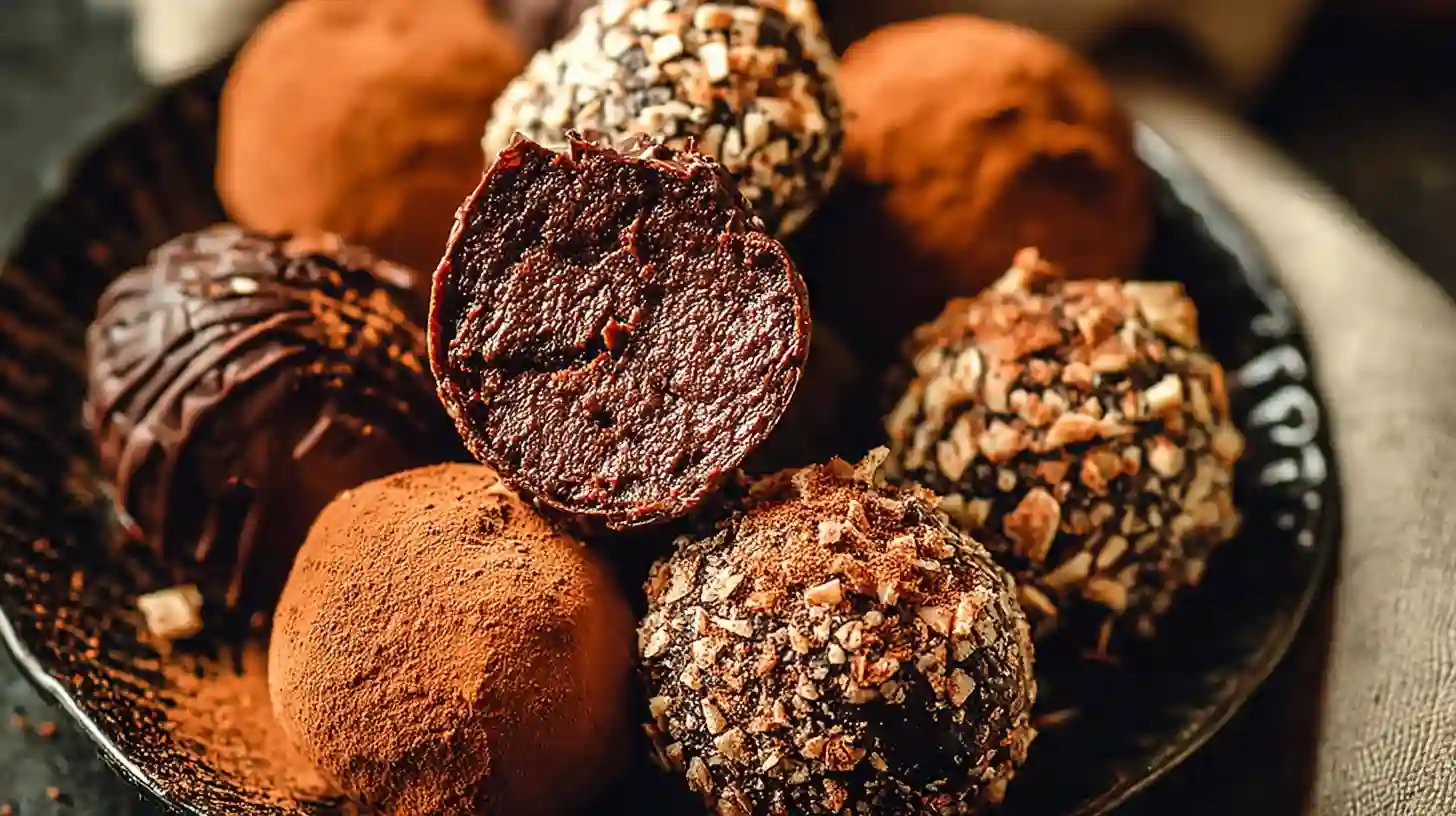
Explore the art of chocolate truffle making, from its accidental origins to mastering the perfect ganache emulsion in your own kitchen. This comprehensive guide details the chemistry, history, and preparation of these decadent confections, offering distinct value to culinary enthusiasts seeking to elevate their dessert skills.
Perfect for creating sophisticated gifts or understanding gourmet varieties, this article provides the essential techniques required to craft professional-quality treats. Discover how to achieve the ideal texture and flavor profile without the need for complex equipment.
Homemade Chocolate Truffles

Equipment
- Mixing bowl
- Heatproof Bowl
- Spatula
- Refrigerator
Ingredients
Truffle Base
- 8 oz quality chocolate semi-sweet or dark, finely chopped (avoid chocolate chips)
- 2/3 cup heavy cream or heavy whipping cream
- 1 tbsp unsalted butter softened
- 1 tsp pure vanilla extract
Optional Coatings
- unsweetened cocoa powder for rolling
- sprinkles or crushed nuts for coating
Instructions
- Finely chop the chocolate and place it in a heatproof bowl.
- Heat the heavy cream in a small saucepan until it just begins to simmer. Pour over the chopped chocolate and let sit for 2–3 minutes without stirring.
- Add the butter and vanilla extract, then stir gently until smooth and fully combined.
- Cover and refrigerate for 1–2 hours, or until the mixture is firm enough to scoop.
- Scoop small portions and roll into balls. Coat in cocoa powder, nuts, or sprinkles as desired.
- Store truffles in an airtight container in the refrigerator for up to 2 weeks or freeze for up to 3 months.
Notes
I still vividly remember the afternoon I learned the true definition of patience in the kitchen. It was a rainy Tuesday in Lyon, France, and I was standing in the small, aromatic kitchen of my neighbor, Madame Colette.
She was a woman of precise movements and few words, but her culinary prowess was legendary in our arrondissement. As I watched her pour shimmering, hot cream over a bowl of dark shards, she looked at me sternly. “Do not rush the union,” she whispered. We were making ganache, the heart of the truffle.
That memory serves as the foundation of my understanding of confectionery; it is a science as much as it is an art. In this article, I will guide you through the intricate world of chocolate truffles, dissecting their history, chemistry, and the methods required to produce them at home with professional standards.
Table of Contents
What Is a Chocolate Truffle?
Defining the Classic Confection
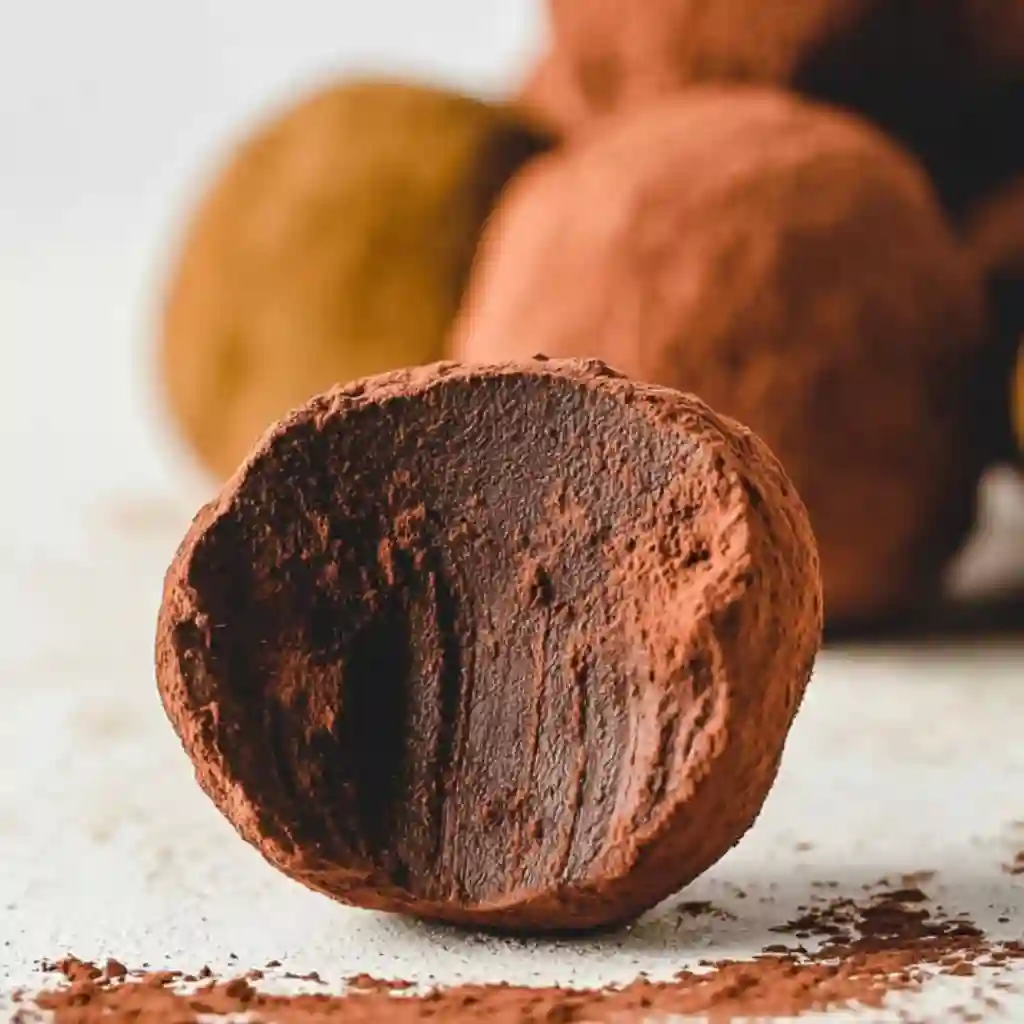
To the uninitiated, a truffle might simply appear to be a lump of chocolate, but it is, in reality, a marvel of culinary engineering. At its core, a chocolate truffle consists of a ganache center a stable emulsion of chocolate and heavy cream that is subsequently coated to allow for handling.
The texture should be smooth, yielding, and devoid of graininess. While commercial versions often rely on stabilizers, the dark chocolate truffles found in high-end patisseries rely on the purity of their ingredients.
It is crucial to distinguish the confection from its namesake, the Tuber melanosporum. The chocolate version is a dessert, whereas the fungus is a savory, subterranean delicacy.
The confection was named purely for its physical resemblance to the rough, soil-covered fungus, a comparison that underscores the rustic, handmade nature of the original Traditional Chocolate Truffles.
The Science of Ganache
When I prepare a ganache, I am essentially forcing two unmixable ingredients the water content in heavy cream and the fat content in cocoa butter to combine into a homogeneous mixture.
This process is known as emulsification. If the cream is too hot, the cocoa butter separates, resulting in an oily disaster; if it is too cool, the chocolate will not melt. The ratio is paramount.
A 2:1 ratio of chocolate to cream yields a firm center suitable for rolling, which is the basis for a standard Chocolate Truffles Recipe A 1:1 ratio creates a softer ganache often used for fillings or frostings. Understanding these ratios allows me to manipulate the texture, ensuring that the resulting Chocolate Bites melt perfectly upon contact with the tongue.
Visual Characteristics
The visual appeal of a truffle lies in its imperfection. Unlike the glossy, molded perfection of a bonbon, a classic truffle is traditionally hand-rolled, resulting in a slightly irregular, lumpy sphere.
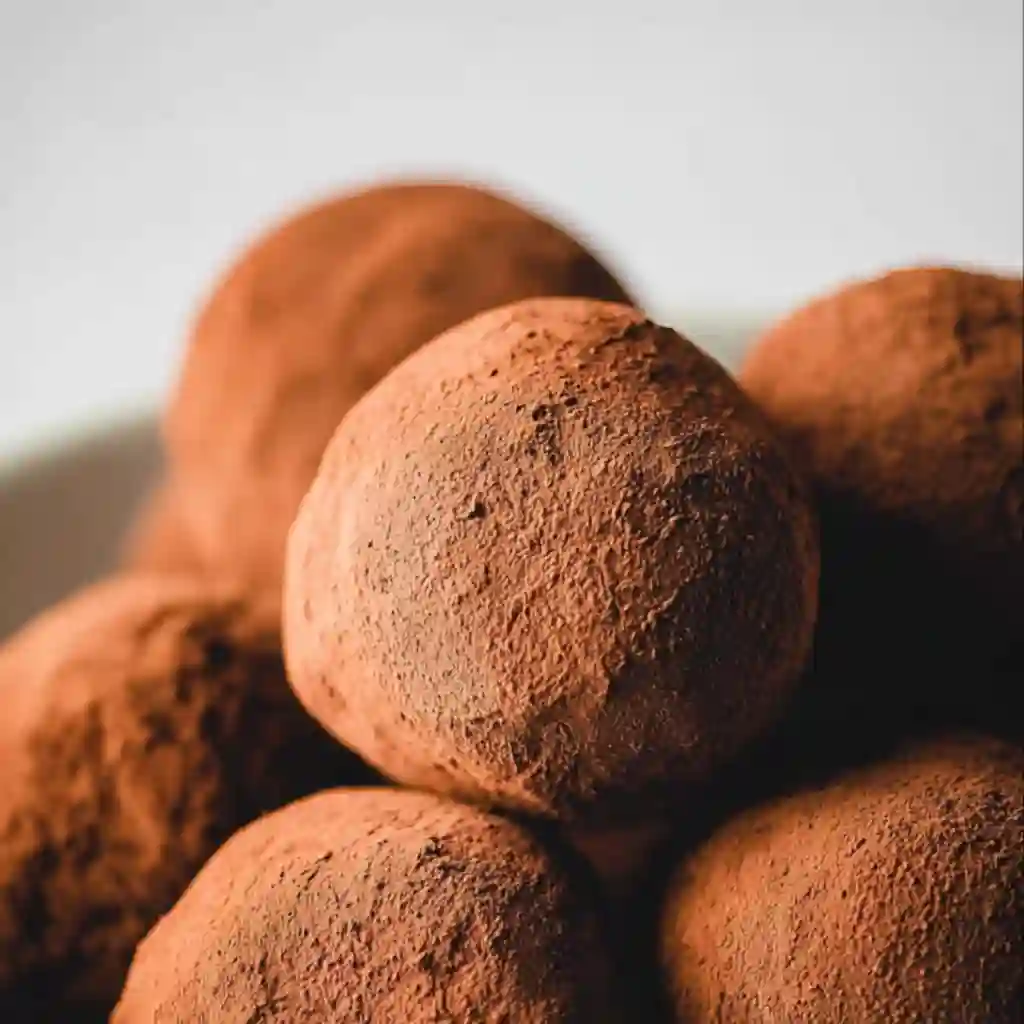
This organic shape is intentional, meant to mimic the earth-dug mushroom. The most common coating is a dusting of unsweetened cocoa powder, which provides a bitter counterpoint to the sweet interior and facilitates handling.
However, modern variations abound. I have seen truffles rolled in toasted coconut, finely crushed nuts, or even dipped in a thin layer of tempered chocolate to create a crisp shell. Whether you are making Easy Chocolate Truffles or complex artisanal versions, the aesthetic should always promise indulgence.
The Fascinating History and Origin
French Beginnings: A Happy Accident
History often tells us that the best inventions are born of mistakes, and the chocolate truffle is no exception. The most prevailing legend dates back to the 1920s in the kitchen of the great French chef Auguste Escoffier.
As the story goes, an apprentice accidentally poured hot cream into a bowl of chopped chocolate instead of the intended egg mixture for a pastry cream. Rather than wasting the expensive ingredients, the chef stirred the mixture and found that, upon cooling, it formed a malleable paste.
He rolled lumps of this paste in cocoa powder and realized the resemblance to the prized truffles of the region. This serendipitous event gave birth to French Chocolate Recipes that are still revered today.
Another claim traces the origin to Louis Dufour, a pastry chef in Chambéry, France, who allegedly invented the treat during Christmas of 1895 to offer his customers something unique.
Why Is a Chocolate Called a Truffle?
The nomenclature of this confection is strictly morphological. The Tuber melanosporum, or black truffle fungus, is a knobby, dark, and highly expensive ingredient found in the forests of Europe.
When the first chocolate versions were created, their irregular shape and coating of dark cocoa powder made them look startlingly similar to these dirt-encrusted mushrooms.
It is a testament to the humor and observation of early chocolatiers that they chose such a savory name for a sweet treat. When I prepare Homemade Dark Chocolate Truffles, I make a point to keep them slightly rustic to honor this historical connection.
Global Expansion
From the patisseries of France, the concept of the truffle spread rapidly across Europe and eventually to North America. Each culture adapted the technique to suit local tastes and available ingredients.
The Swiss mastered the use of milk chocolate, while Belgians introduced the concept of the “praline” shell. By the time the recipe reached American shores, it had evolved into various forms, including the larger, sweeter versions we see today.
This global journey has diversified French Candy Recipes, allowing for infinite creativity in kitchens worldwide.
Types of Chocolate Truffles Around the World
The French Truffle (The Original)
The French truffle remains the gold standard for purists. When I make these, I adhere strictly to fresh heavy cream and high-quality chocolate.
The shelf life of a true French truffle is notoriously short perhaps a few days because it lacks preservatives. The focus is entirely on the freshness of the dairy and the intensity of the cocoa.
These are typically coated simply in cocoa powder. If you are looking for gourmet chocolate truffles that prioritize flavor depth over longevity, the French style is the superior choice.
The Swiss Truffle
The Swiss approach differs significantly in production. Swiss chocolatiers often heat the butter and cream together before adding the chocolate, creating a slightly different emulsion.
Furthermore, Swiss truffles are frequently cast in molds rather than hand-rolled, giving them a uniform, perfectly spherical appearance. This method often results in a product with a longer shelf life.
While I prefer the rustic look, the precision of Swiss confectionery is undeniable. Many chocolate truffles online that you might purchase for gifts follow this more robust production method.
The Belgian Truffle (The Praline)
In Belgium, what is often called a truffle is technically a “praline.” The structural difference here is the presence of a hard chocolate outer shell.
The filling is piped into this shell and can vary from traditional ganache to fruit purées, nut pastes, or buttercream. This allows for a liquid or semi-liquid center that would be impossible to achieve with a hand-rolled truffle.
Brands famous for lindor chocolate truffles essentially utilize a variation of this technique, where a hard shell encases a smooth, melting center. Similarly, lindor milk chocolate truffles are prime examples of this shell-and-filling duality.
The American Truffle
American truffles tend to be larger and sweeter. The shape is often described as a “half-egg” or a large, imperfect sphere. In the United States, it is common to find coatings of milk chocolate rather than cocoa powder, and the ganache may include butterfat or coconut oil to stabilize the mixture for transport and longer storage.
I have also noticed that chocolate truffles no bake recipes in America frequently incorporate other confections, such as crushed cookies or peanut butter, deviating from the pure chocolate-cream profile.
Other Regional Variations
The versatility of the truffle concept is evident in how different regions incorporate local flavors. In Spain, one might find truffles made with condensed milk, offering a distinct milky sweetness.
In Canada, a variation known as the “Harvey Truffle” involves using graham cracker crumbs and peanut butter, similar to Truffle Balls found in home baking.
I also enjoy experimenting with Brownie Truffles, where baked brownie crumbs are mixed with cream cheese or ganache, bridging the gap between cake and candy.
I have found that Ferrero Rocher Truffles are another interesting variation, utilizing a wafer shell and hazelnuts, which adds a crunch that traditional ganache lacks. Whether you are attempting making chocolate truffles of the French variety or the more structural Belgian kind, understanding these regional differences is key.
If you are browsing truffles chocolate price lists, you will often find that the origin and style significantly dictate the cost.
How to Make Homemade Chocolate Truffles
Choosing the Right Ingredients
The quality of your truffles is directly proportional to the quality of your chocolate. I cannot stress this enough: do not use chocolate chips.
Chips contain stabilizers meant to help them hold their shape in cookies, which prevents them from melting into a smooth emulsion. Instead, select high-quality couverture chocolate bars with 60-70% cocoa solids.
For the cream, ensure you are using heavy whipping cream with a high fat content. If you are attempting gluten free chocolate truffles, verify that your chocolate processing facility is certified gluten-free.
Step-by-Step Recipe Guide
Here is how I approach the process to ensure success every time:
- Step 1: I begin by chopping the chocolate into very fine, uniform shards. This increases the surface area, allowing the hot cream to melt it quickly and evenly.
- Step 2: I heat the heavy cream in a saucepan until it just reaches a simmer. It is vital to avoid a rolling boil, as scorching the cream will ruin the flavor.
- Step 3: I pour the hot cream over the chocolate and this is the secret I let it sit undisturbed for five minutes. This resting period allows the heat to penetrate the chocolate. Then, I stir gently in concentric circles to create the emulsion.
- Step 4: Once smooth, I cover the bowl and refrigerate it. The chilling time depends on the depth of the bowl, but usually, 1 to 2 hours is sufficient to reach a scoopable consistency.
This fundamental process is the basis for any Chocolate Truffles Recipe. Once firm, I use a melon baller or teaspoon to scoop mounds, which I then roll between my palms.
Flavor Infusions and Variations
To elevate the basic recipe, I often infuse the cream before heating. Fresh mint leaves, earl grey tea, or cinnamon sticks can be steeped in the warm cream and then strained out.
For liquid flavorings, I add them after the ganache has been emulsified but before it sets. Vanilla bean paste or fruit extracts are excellent choices. I have found that unique chocolate truffles can be made by adding a pinch of cayenne pepper for heat or sea salt for balance.
Chocolate Combos like orange-chocolate or raspberry-dark chocolate are timeless classics.
Troubleshooting Common Issues
Even with experience, things can go wrong.
- Seizing: If even a drop of water gets into melting chocolate, it can seize and become a hard, clumpy mess. Ensure all tools are completely dry.
- Grainy Texture: If the emulsion “breaks” and the oil separates, the ganache will look greasy and grainy. I fix this by adding a teaspoon of warm milk and stirring vigorously until it comes back together.
- Sticky Hands: When rolling Chocolate Balls Recipe, the heat of your hands will melt the chocolate. I recommend keeping a bowl of ice water nearby to cool your hands, or dusting them generously with cocoa powder.
If you are looking for Homemade Truffles Easy to handle, try chilling the scooped mounds for another 20 minutes before the final rolling. This technique is also helpful for Chocolate Christmas Balls, where you might want to apply complex sprinkles or decorations that require a firm surface.
Dietary Considerations: Halal, Vegan, and Health
Is Truffle Chocolate Halal?
When I prepare truffles for diverse groups, I am mindful of ingredients. Traditional recipes often use liqueurs, which are not permissible in Halal diets. However, making chocolate truffles without alcohol is entirely possible and often results in a purer chocolate taste.
I substitute alcohol-based extracts with oil-based flavorings or pure fruit purees. Always check the vanilla extract, as some brands use alcohol as a solvent; alcohol-free versions are readily available.
Furthermore, ensure there is no gelatin used in any fillings, although traditional ganache is naturally gelatin-free.
Vegan and Dairy-Free Options
For vegan friends, I substitute heavy cream with full-fat canned coconut milk. The fat content is high enough to create a stable emulsion, though it imparts a slight coconut flavor.
To mask this, I often make dark chocolate sea salt truffles, where the salt cuts through the coconut notes. Cashew cream is another excellent, neutral-tasting alternative.
Naturally, one must use dairy-free dark chocolate and plant-based butter if the recipe calls for it. These chocolate truffles no bake variations are often just as decadent as their dairy counterparts.
Are Chocolate Truffles Healthy?
It is important to be realistic: truffles are a calorie-dense treat. However, dark chocolate truffles made with high-percentage cacao offer health benefits.
Dark chocolate is rich in flavonoids and antioxidants, which can support cardiovascular health. I believe that chocolate powdered truffles are a better option than those coated in sugary sprinkles, as they add flavor without extra refined sugar.
Enjoying one or two unique chocolate truffles is a way to satisfy a craving responsibly.
Storage, Shelf Life, and Gifting
Proper Storage Techniques
Chocolate is sensitive to environment. I always store my truffles in a cool, dry place, ideally between 60°F and 68°F. If your kitchen is hot, refrigeration is necessary, but be warned: moisture is the enemy.
When chocolate moves from a cold fridge to a warm room, condensation can form, causing “sugar bloom” (white rough patches). To prevent this, I keep them in an airtight container and let them come to room temperature before opening. This preserves the look of your Elegant Chocolate Truffles.
Shelf Life Expectations
Homemade truffles made with fresh cream have a short lifespan. I recommend consuming them within one week if kept cool, or two weeks in the refrigerator. Commercial chocolate truffles online often last months due to preservatives, but the flavor profile of a fresh Christmas Truffles Recipe is incomparable.
For long-term storage, you can freeze them. I wrap them individually in foil and place them in a freezer bag. They can last up to 3 months this way.
Packaging and Gifting Ideas
There is nothing quite like receiving a box of Homemade Dark Chocolate Truffles. I like to place them in mini paper candy liners to prevent them from sticking together. A tin box or a rigid cardboard box lined with parchment paper works best.
If you are making Chocolate Bites for a holiday, consider layering them with wax paper. Truffles Recipe Easy modifications, like rolling them in red and green sprinkles, make them festive Chocolate Christmas Balls perfect for teachers or neighbors.
More easy Recipes To Try!
Frequently Asked Questions (FAQs)
What are chocolate truffles made of?
At their most basic level, chocolate truffles are made of two primary ingredients: chocolate and heavy cream. This mixture is called ganache.
Butter is often added for creaminess, and flavorings like vanilla, fruit purees, or coffee extracts can be included. The exterior is usually coated in cocoa powder, tempered chocolate, or chopped nuts.
Why is a chocolate called a truffle?
The confection is named “truffle” because of its strong physical resemblance to the prized edible fungus known as the truffle (Tuber melanosporum).
The original French chocolate truffles were rough, lumpy, and dusted with cocoa powder, looking exactly like the dirt-covered mushrooms dug up from the forest floor.
Is truffle chocolate halal?
It depends on the specific recipe. Traditional chocolate truffles often contain liqueurs or vanilla extract preserved in alcohol, which may not be Halal. However, alcohol-free recipes that use pure chocolate, cream, and oil-based flavorings are generally Halal. Always check the ingredients list for alcohol or gelatin.
How do you make chocolate truffles?
To make them, pour hot (simmering) heavy cream over finely chopped chocolate. Let it sit for 5 minutes, then stir gently until smooth. Refrigerate the ganache until firm (1-2 hours), then scoop it into small balls. Roll the balls in your hands to shape them, and finally roll them in toppings like cocoa powder or sprinkles.
Are chocolate truffles healthy?
While delicious, they are a calorie-dense treat high in sugar and saturated fat. However, truffles made with high-quality dark chocolate (70% cocoa or higher) contain antioxidants called flavonoids, which can support heart health. They should be enjoyed in moderation as an indulgence.
Do chocolate truffles need to be refrigerated?
Homemade truffles made with fresh cream should be refrigerated and will last about 2 weeks. However, they are best eaten at room temperature, so take them out 30 minutes before serving. Commercial truffles with hard shells can often be stored in a cool, dry pantry for months.