

Experience the epitome of tropical indulgence with this definitive guide to the Creamy Coconut Cake. This dessert is a masterful composition of textures, featuring a tender, liquid-infused sponge, a rich dairy soak, and a billowy, cloud-like topping. Far simpler to execute than traditional layer cakes, this “poke” method ensures consistent moisture and profound flavor in every bite.
Whether you are preparing a centerpiece for a holiday table or a comforting treat for a summer gathering, this recipe delivers a sophisticated taste profile with minimal effort. Discover the culinary science behind the soak and elevate your baking repertoire today.
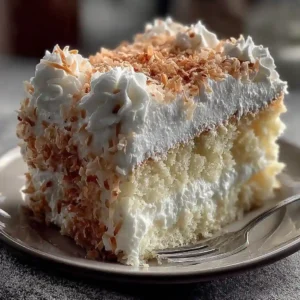
Creamy Coconut Cake

Equipment
- 9×13-inch baking pan
- Mixing bowls
- Whisk
- Spatula
Ingredients
Cake
- 1 box white cake mix prepared according to package directions
Soak Mixture
- 1 can (14 oz) cream of coconut
- 1 can (14 oz) sweetened condensed milk
Topping
- 16 oz frozen whipped topping thawed
- 10 oz flaked coconut
Instructions
- Preheat oven to 350°F (175°C). Prepare the white cake according to package directions and bake in a 9×13-inch pan.
- Allow the cake to cool completely in the pan.
- In a small bowl, combine cream of coconut and sweetened condensed milk, stirring until well mixed.
- Using a straw or wooden spoon handle, poke holes evenly across the cooled cake.
- Pour the coconut-milk mixture slowly over the cake, allowing it to soak in.
- Spread the thawed whipped topping evenly over the cake.
- Sprinkle flaked coconut generously over the top.
- Refrigerate for at least 2 hours before serving to allow the cake to chill and absorb the flavors.
Notes
Table of Contents
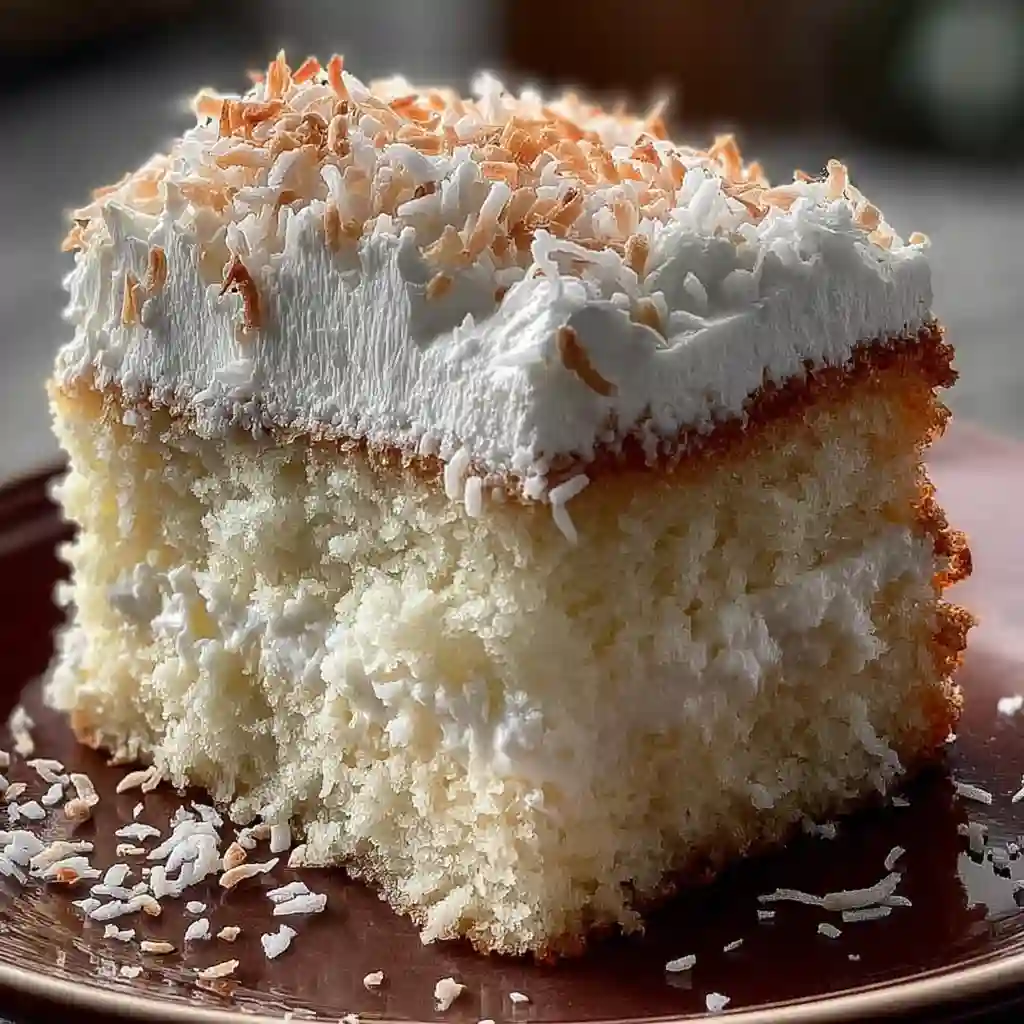
Why This Coconut Dessert Is a Crowd-Pleaser
I still recall the first time I encountered this specific style of dessert. It was in the sun-drenched kitchen of my neighbor, Madame Claire, a woman of impeccable French taste who surprisingly held a deep affection for American comfort food.
She pulled a chilled rectangular pan from her refrigerator, the top resembling a snow-covered landscape. “This,” she whispered conspiratorially, “is better than any fancy patisserie.” One bite confirmed her assertion; it was cool, impossibly moist, and rich with tropical nuance.
This universal appeal is exactly why the creamy coconut cake recipe remains a staple in my repertoire. It bridges the gap between sophistication and comfort. Unlike dry sponges that require endless cups of tea to wash down, this cake offers a melt-in-the-mouth experience.
The secret lies in its classification as a “poke cake.” By piercing the baked sponge and flooding it with a rich liquid, we ensure that the moisture is not just on the surface but integrated into the very crumb of the dessert.
This method democratizes the baking process. You do not need a culinary degree to produce a creamy coconut cake that tastes professional. It transforms humble pantry staples into a delicious creamy coconut cake that rivals high-end bakery offerings.
The Perfect Dessert for Every Occasion
There is a versatility to this cake that few other desserts possess. It is elegant enough for an Easter Dessert Table, where its snowy white appearance mirrors the fresh aesthetic of spring. Yet, it is equally at home at a casual summer barbecue.
I have found that this is the best coconut cake recipe ever for stress-free hosting. Because it requires refrigeration and improves with time, it frees up the host to focus on the main course rather than last-minute baking.
Complex layer cakes often require precise leveling, crumb coating, and piping skills. In contrast, this easy creamy coconut cake demands none of that architectural engineering. It is a high-reward, low-effort creation.
Whether you are looking for yummy sweets to end a Sunday dinner or a reliable contribution to a potluck, this cake delivers. It captures the essence of an old fashioned creamy coconut cake while fitting perfectly into a modern, busy lifestyle.
What is a Creamy Coconut Cake?
Understanding the “Poke Cake” Method
To truly appreciate this dessert, one must understand the mechanics of the “poke cake.” It is a technique that emerged in the mid-20th century, originally popularized to infuse gelatin into cakes. However, we have evolved past gelatin.
In this context, the method involves baking a sturdy sponge often a coconut cake using box cake as a reliable base and piercing it while it is still receptive to liquid. These holes act as culinary reservoirs.
When we pour our soaking liquid over the surface, gravity and capillary action draw the moisture deep into the matrix of the cake. This transforms a standard crumb into a moist creamy coconut cake recipe that is dense yet light.
The result is a texture that sits somewhere between a traditional sponge and a custard. It is this unique consistency that defines the creamy coconut cake delight. It is not just a cake with topping; it is a unified, saturated delight.
The Science Behind the Soak
The magic of this recipe lies in the specific viscosity and sugar content of the soaking liquid. We utilize a blend of Cream of Coconut and Sweetened Condensed Milk. This is what creates a moist coconut cake with condensed milk.
Sweetened condensed milk provides a milky richness and a high sugar concentration that preserves the moisture within the cake crumb. It prevents the liquid from simply evaporating or making the cake soggy.
Cream of coconut adds the distinct fat content and tropical flavor profile. When combined, these two ingredients create a syrup that is thick enough to cling to the crumb but fluid enough to penetrate it.
This technique is reminiscent of the Latin American Tres Leches, but with a distinct tropical profile. It is the key to creating a creamy coconut cake with condensed milk that feels luxurious on the palate.
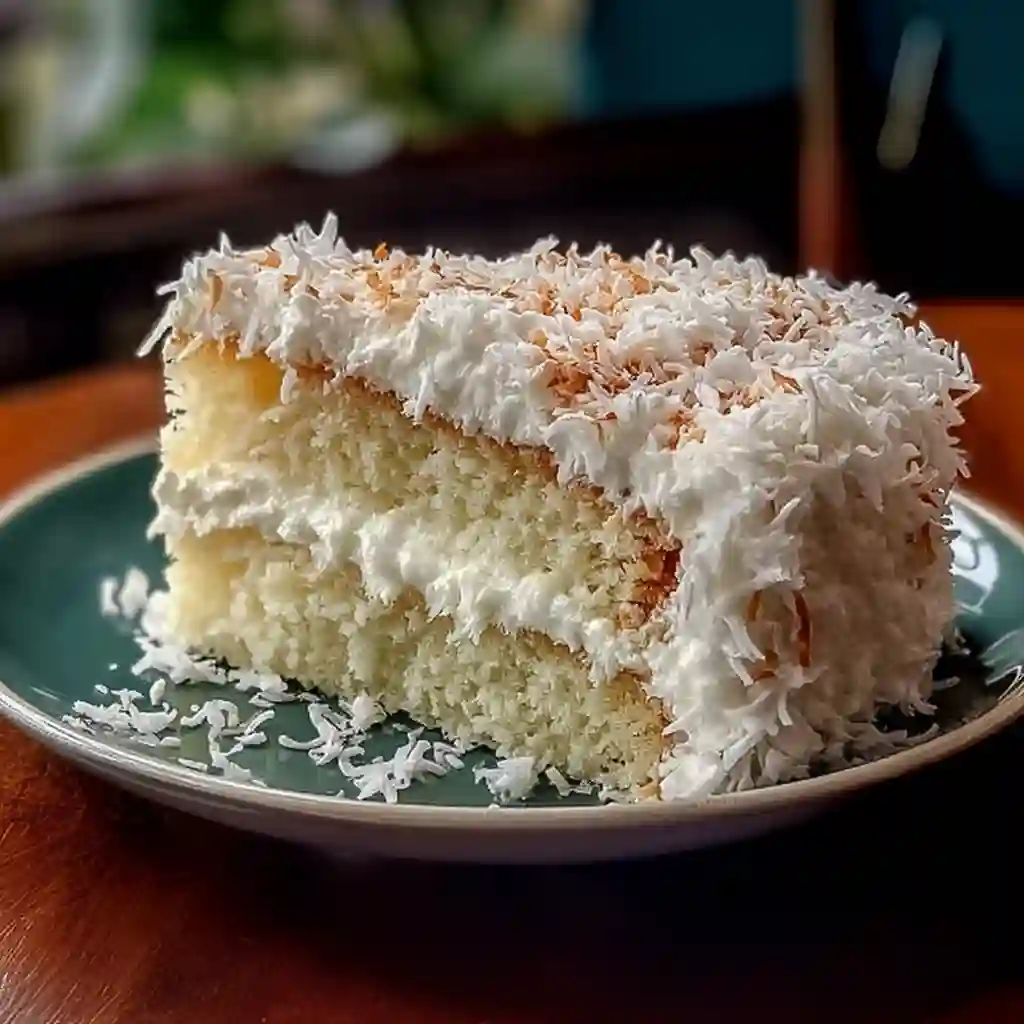
Essential Ingredients for the Best Creamy Coconut Cake
Selecting the Right Cake Base
The foundation of any great poke cake is the sponge. While some purists insist on scratch baking, I find that for this specific application, a high-quality box mix is often superior.
A creamy coconut cake with white cake mix offers a neutral, vanilla canvas that allows the coconut flavor to shine without competition. The stabilizers in the mix also help the cake hold up against the heavy soak.
If you prefer a coconut cake from scratch, ensure your sponge is robust. A delicate genoise might disintegrate under the weight of the milk mixture. You want a crumb structure that is absorbent yet structural.
Some bakers opt for a yellow mix, but I believe the creamy coconut cake benefits aesthetically and flavor-wise from the purity of a white cake. It provides a clean, visual contrast to the golden toasted coconut if you choose to use it.
Cream of Coconut vs. Coconut Milk: A Crucial Distinction
There is a common pitfall that many novice bakers encounter: confusing coconut milk with cream of coconut. This distinction is vital for a tasty creamy coconut cake.
Coconut milk is generally unsweetened, thinner, and used in savory curries or soups. If you use this, you will end up with a creamy coconut cake with coconut milk that lacks sweetness and viscosity.
Cream of coconut, such as the Coco Lopez brand often used in cocktails, is thick, syrupy, and heavily sweetened. It is the engine of flavor in this best cream of coconut cake.
Using the correct ingredient ensures the soak sets properly within the cake. It provides the necessary sugar structure to create that creamy and decadent coconut cake texture we crave.
The Whipped Topping and Coconut Finish
The final layer provides a necessary textural contrast. We typically use a stabilized whipped topping, like Cool Whip, because it holds its volume even after days in the refrigerator.
While fresh whipped cream is delicious, it tends to weep over time, which can make the cake soggy. For a creamy coconut cake delight recipe that lasts, stabilized topping is the pragmatic choice.
For the coconut finish, you have choices. Sweetened flaked coconut offers a chewy, candy-like texture that pairs well with the creamy coconut cake filling.
Alternatively, unsweetened shredded coconut provides a drier, more fibrous bite that cuts through the sugar. Both contribute to the old fashioned coconut cream cake aesthetic that makes this dessert so inviting.
Step-by-Step: How to Make Creamy Coconut Cake
Baking and Preparing the Sponge
The journey to the perfect cake begins with the bake. Prepare your pan with grease and flour to ensure easy removal of slices later. Whether you are using a coconut cake using box cake method or a scratch recipe, temperature control is key.
Bake the cake until a toothpick comes out clean, but do not overbake. An overbaked cake develops a thick crust that can be difficult to poke through. We want a tender surface for our creamy coconut cake recipe.
Once removed from the oven, allow the cake to cool for about ten to fifteen minutes. This rest period allows the crumb structure to set slightly, preventing it from turning into mush when we begin the next step.
However, do not let it cool completely cold. A slightly warm cake absorbs the creamy coconut cake with condensed milk mixture more efficiently, drawing the liquid into its center.
The Poking and Soaking Technique
Now, we approach the defining step of the process. Select your tool wisely. A fork creates holes that are too small, while a large finger poke is too destructive. The handle of a wooden spoon is the ideal instrument for an easy creamy coconut cake.
Poke holes methodically across the entire surface, spacing them about an inch apart. Ensure you poke about halfway to three-quarters down do not go all the way to the bottom, or the liquid will pool at the base.
Mix your cream of coconut and condensed milk until perfectly combined. Pour this liquid slowly. I like to pour it in passes, allowing the first wave to absorb before adding the second.
Watch as the white sponge drinks up the liquid. This is the moment a dry cake transforms into a moist coconut cake with condensed milk. Ensure you get the liquid into the corners and edges, which are often the driest parts.
Layering the Frosting and Garnish
Once the cake has fully cooled and absorbed the liquid, it is time for the topping. If you apply the whipped topping to a warm cake, it will melt and slide off. Patience is crucial for a delicious creamy coconut cake recipe.
Dollop the whipped topping over the surface. Use an offset spatula to spread it into a smooth, billowy layer. This white cloud is the signature look of a creamy coconut cake.
Finally, take your coconut flakes and sprinkle them generously. You want complete coverage. It should look like a fresh snowfall. This layer adds the essential chew to the creamy coconut cake recipes.
Refrigerate immediately. The cake needs time to set. This resting period is not just about temperature; it is about flavor melding, turning the components into a cohesive creamy coconut cake delight.
Variations and Customizations for Your Coconut Cake
Toasted Coconut vs. Raw Coconut
One simple modification can completely alter the flavor profile. While the classic recipe uses raw, sweetened flakes, toasting the coconut adds a sophisticated depth. This is often seen in southern coconut cake recipe variations.
To toast, simply spread the flakes in a dry pan over medium heat, stirring constantly until they turn a golden brown. The heat releases the natural oils, intensifying the aroma.
Using toasted coconut on top creates a creamy coconut cake with a delightful crunch that contrasts with the soft interior. It adds a nutty, caramelized note that balances the sweetness of the condensed milk.
If you prefer the pure, unadulterated taste of coconut, stick to the raw flakes. This yields a whiter, softer finish typical of a creamy coconut cake allrecipes style presentation.
Adding Tropical Fruit Accents
Why stop at coconut? This cake is a fantastic canvas for other tropical flavors. Incorporating crushed pineapple into the batter or the topping transforms it into a Piña Colada-inspired dessert.
This variation is sometimes referred to as a coconut upside down cake hybrid. The acidity of the pineapple cuts through the rich dairy, creating a creamy moist coconut cake that is refreshing.
You can also zest a lime over the top for a lemon coconut cake twist. The citrus oils add a bright, aromatic top note that lifts the heavy sweetness.
Garnishing with maraschino cherries or macadamia nuts adds color and texture. These small additions can elevate an easy coconut cake recipe into a show-stopping centerpiece.
Serving, Storing, and Freezing Tips
Why Refrigeration is Essential
Unlike a standard buttercream cake, the creamy coconut cake is practically a dairy dessert. The condensed milk and whipped topping require constant refrigeration to remain safe and maintain structure.
Furthermore, the cold temperature is essential for the texture. A warm poke cake can feel gummy. A chilled creamy coconut cake with oil based sponge feels refreshing and firm.
I always recommend making this cake at least 24 hours in advance. This marinating time allows the moisture to redistribute perfectly, resulting in the best coconut cream cake recipe experience.
Cover the cake tightly with plastic wrap or a fitted lid. This prevents the fatty ingredients, like the coconut cream cheese pound cake elements, from absorbing savory odors from the fridge.
Freezing Instructions for Long-Term Storage
Surprisingly, this cake freezes exceptionally well. If you have leftovers, or if you want to prep for a future event, you can freeze the creamy coconut cake.
For the best results, freeze individual slices. Wrap them tightly in plastic wrap, then a layer of aluminum foil. This double barrier protects the moist creamy coconut cake recipe from freezer burn.
When you are ready to eat, simply thaw a slice in the refrigerator overnight. The texture remains remarkably close to fresh. It is a wonderful way to have healthy coconut cake recipe treats on hand (in moderation, of course).
However, note that the toasted coconut topping might lose some of its crispness. If freezing a whole cake, consider adding the fresh coconut topping after thawing for the ultimate creamy coconut cake recipe from scratch taste.
More easy Recipes To Try!
Pretzel-Crusted Chicken with Creamy Mustard Cheddar Sauce
Cheesy Philly Steak Tortellini Skillet
Frequently Asked Questions (FAQs)
What is the difference between coconut milk and cream of coconut?
Draft Answer: This is a critical distinction in baking. Coconut milk is the liquid extracted from grated coconut meat, usually unsweetened and thin, suitable for savory dishes.
Cream of coconut is a highly sweetened, thick syrup used for desserts and cocktails. For a delicious creamy coconut cake, you must use cream of coconut to achieve the correct sweetness and moisture level.
Can I make creamy coconut cake ahead of time?
Draft Answer: Absolutely. In fact, this is one of the few cakes that benefits significantly from resting.
Making the creamy coconut cake recipe a day in advance allows the soaking liquid to fully permeate the crumb, resulting in a more cohesive and flavorful dessert. It is the perfect old fashioned creamy coconut cake recipe for stress-free entertaining.
Can I use a homemade cake recipe instead of a box mix?
Draft Answer: Yes, you can use a scratch sponge. However, ensure that your coconut cake from scratch is sturdy. Very light, airy cakes may become too soggy when soaked.
A denser crumb, similar to a pound cake recipes base or a butter cake, works best to hold the heavy liquid of the creamy coconut cake.
How long does this coconut cake last in the fridge?
Draft Answer: Because of the sugar content acting as a preservative and the refrigeration, the creamy coconut cake stays fresh for quite a while. Typically, it is good for 4 to 5 days.
Ensure it is covered tightly to prevent the creamy coconut cake recipes from drying out or absorbing odors.
Conclusion
The Ultimate Tropical Treat
In the realm of desserts, few creations offer the high satisfaction-to-effort ratio of the Creamy Coconut Cake. It is a testament to the idea that great baking does not always require complex techniques or obscure ingredients. By understanding the simple science of the poke and soak method, you can create a dessert that is consistently creamy and decadent coconut cake.
I encourage you to bring this taste of the tropics into your kitchen. Whether it is for a holiday gathering or a simple weeknight treat, this taste creamy coconut cake will undoubtedly spark joy. Gather your ingredients, preheat your oven, and prepare to impress your guests with the old fashioned creamy coconut cake that tastes like a slice of paradise.